
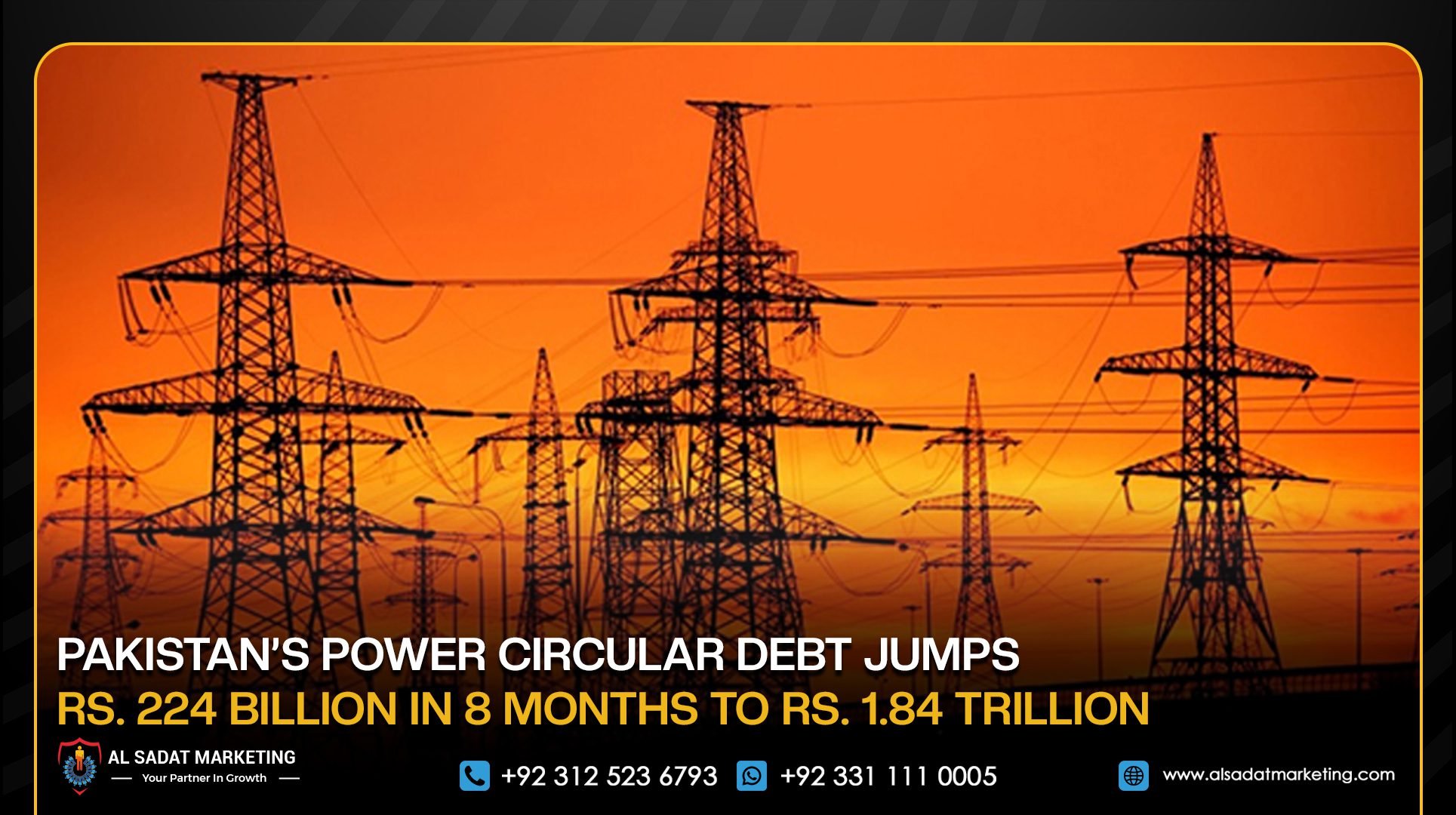
Pakistan’s power sector circular debt increased by Rs. 224 billion during the first eight months of the current fiscal year, reaching Rs. 1.837 trillion by February 2026.
The debt stock had stood at Rs. 1.614 trillion in June 2025. However, according to the Power Division, the figure slightly improved to Rs. 1.798 trillion in March, suggesting some short-term stabilization in the sector.
On a yearly basis, the overall burden showed notable improvement. Circular debt declined by Rs. 693 billion compared to its peak level of Rs. 2.531 trillion recorded in February 2025, mainly due to repayments and financial restructuring measures.
To control the growing debt problem, the government arranged Rs. 1.225 trillion in financing from 18 commercial banks in September. The six-year loan facility will be repaid in 24 quarterly installments and is being serviced through a Rs. 3.23 per unit surcharge charged to electricity consumers.
Officials maintain that the government remains committed to achieving zero net addition to circular debt by the end of the fiscal year under its Circular Debt Management Plan. They argue that monthly fluctuations do not necessarily create extra pressure on consumers.
Sector operations have also shown some improvement. Losses and inefficiencies in power distribution companies fell by Rs. 48 billion between July and February compared to the same period last year, reflecting tighter governance and stronger enforcement measures.
The government’s broader strategy focuses on replacing costly liabilities with lower-cost borrowing while implementing structural reforms aimed at gradually reducing the circular debt stock over the next six years.
Despite these efforts, risks remain. Karachi-based K-Electric’s unpaid dues to the government rose sharply to Rs. 365 billion by February 2026, compared to Rs. 218 billion in June 2025, marking an increase of more than 67 percent.
These liabilities include Rs. 169 billion in principal and Rs. 195 billion in markup, much of which accumulated after the company secured a court stay on its multi-year tariff, temporarily halting payments to the government.