
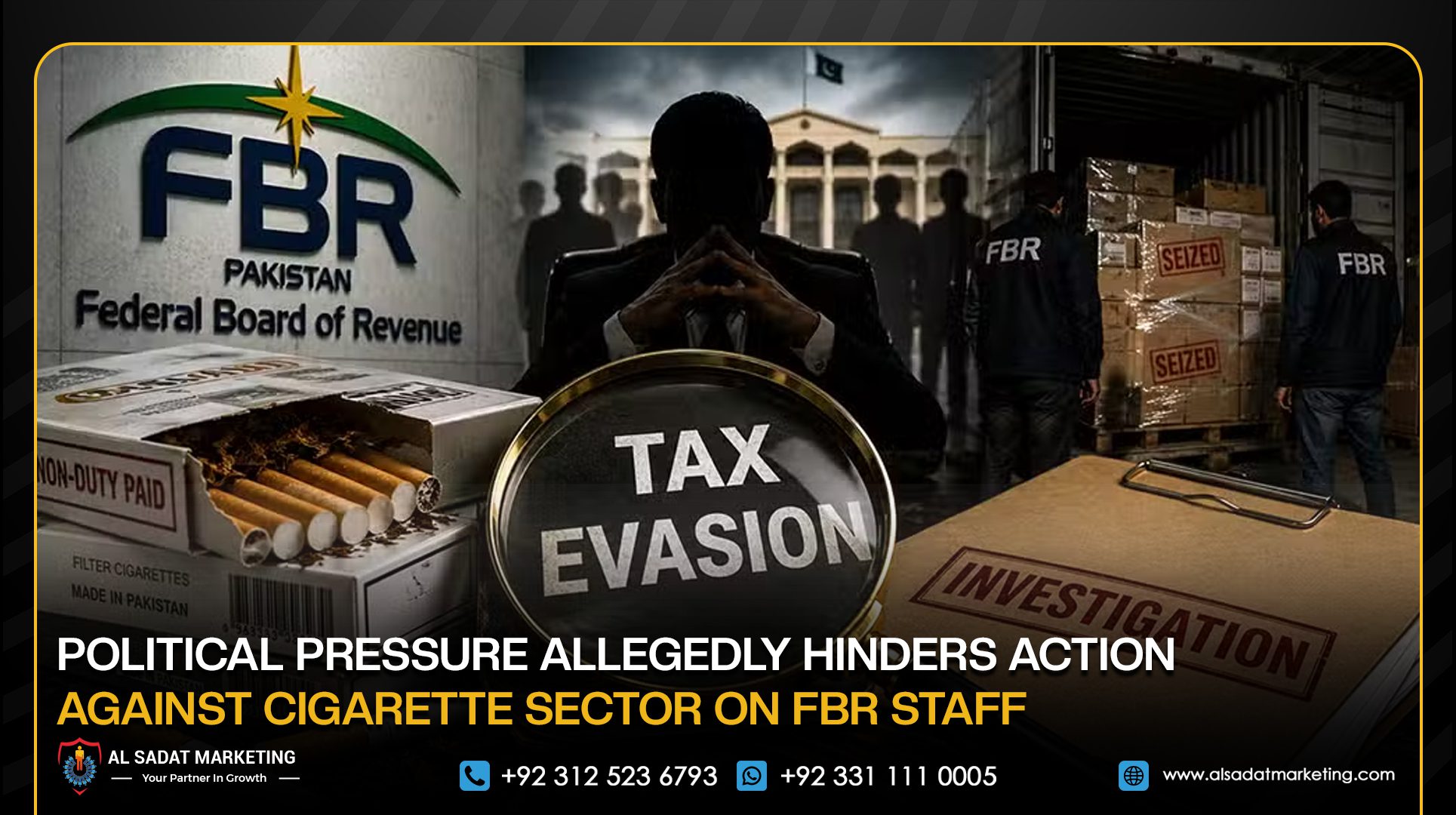
Enforcement efforts against alleged tax-evading cigarette manufacturers in Pakistan are reportedly being hindered due to political influence and pressure on tax officials.
Sources within Inland Revenue told ProPakistani that field officers in multiple regions have become hesitant to initiate or aggressively pursue cases involving cigarette companies allegedly linked to politically connected individuals. As a result, enforcement action in several matters has reportedly slowed significantly.
Senior officials claimed the issue stems from pressure placed on field formations by influential figures, urging them to avoid sensitive cases. They also alleged that criticism of senior tax officers during parliamentary committee meetings has discouraged tougher enforcement.
According to sources, individuals with direct or indirect business interests in the tobacco sector, or their close associates, are present in legislative forums responsible for oversight of the industry. Officials fear this overlap may be creating an environment where impartial investigations become difficult.
Within the Federal Board of Revenue (FBR), sources described a growing sense of uncertainty, where action against politically connected cigarette manufacturers may bring public criticism or administrative pressure.
The controversy reportedly intensified after a Senate subcommittee began reviewing the alleged theft of confiscated cigarettes from warehouses in Khyber Pakhtunkhwa. Officials claimed the focus of the inquiry shifted from missing stock to scrutiny of FBR personnel involved in enforcement operations.
The original case dates back to 2024, when RTO Peshawar teams allegedly seized around 1,262 cartons of duty-unpaid cigarettes, including products lacking track-and-trace verification and suspected counterfeit tax stamps.
Officials also claimed enforcement teams found large quantities of undocumented raw tobacco during inspections, while warehouse management allegedly failed to provide supporting records requested by tax authorities.
Due to limited official storage capacity, the seized goods were temporarily placed in warehouses located in Shahbaz Garhi, Mardan. Internal letters later showed repeated requests by tax officers for secure storage facilities, guards, and surveillance systems to protect the confiscated stock.
Several consignments were reportedly linked to multiple tobacco companies, including firms allegedly associated with politically exposed persons. Separate seizures of raw tobacco were also reported in Swabi.
A later security breach at the Mardan warehouse allegedly resulted in the disappearance of a significant portion of the seized goods. The stock was later recovered and moved to a more secure facility in Swabi.
However, after administrative transfers, another discrepancy was reported at the Swabi warehouse. An FIR was registered, but early findings suggested the issue may have originated from the earlier Mardan incident rather than a fresh theft.
The investigation initially began with local police before being transferred to the FIA. Sources claimed the matter later became subject to institutional disagreement due to political interference.
Some tax officers also reported missing documentation and incomplete questioning of warehouse staff. Two FBR inspectors were allegedly pressured during the inquiry to provide statements against senior Inland Revenue officers but refused.
Officials involved in earlier crackdowns claimed they had uncovered billions of rupees worth of non-duty-paid cigarettes and raw materials. They also said tax collections from certain cigarette companies increased sharply after the enforcement actions became public.
Internal FBR communications reviewed by ProPakistani reportedly show that multiple seizure reports were formally submitted through official channels, indicating that enforcement teams had followed due process before the controversy escalated.
Some officials also criticized the conduct of the Senate committee handling parts of the case, alleging that FBR representatives were subjected to aggressive questioning and threats of punishment.
They further said enforcement behavior in the field has changed, with officers now more cautious in politically sensitive cases involving the tobacco sector.
FBR data shows that enforcement operations in the cigarette industry have remained active over the last three fiscal years, with hundreds of raids and seizures involving cigarettes, machinery, and raw tobacco.
Officials warned that unless stronger safeguards are introduced to protect institutional independence and prevent conflicts of interest, enforcement effectiveness in the sector may continue to weaken.