
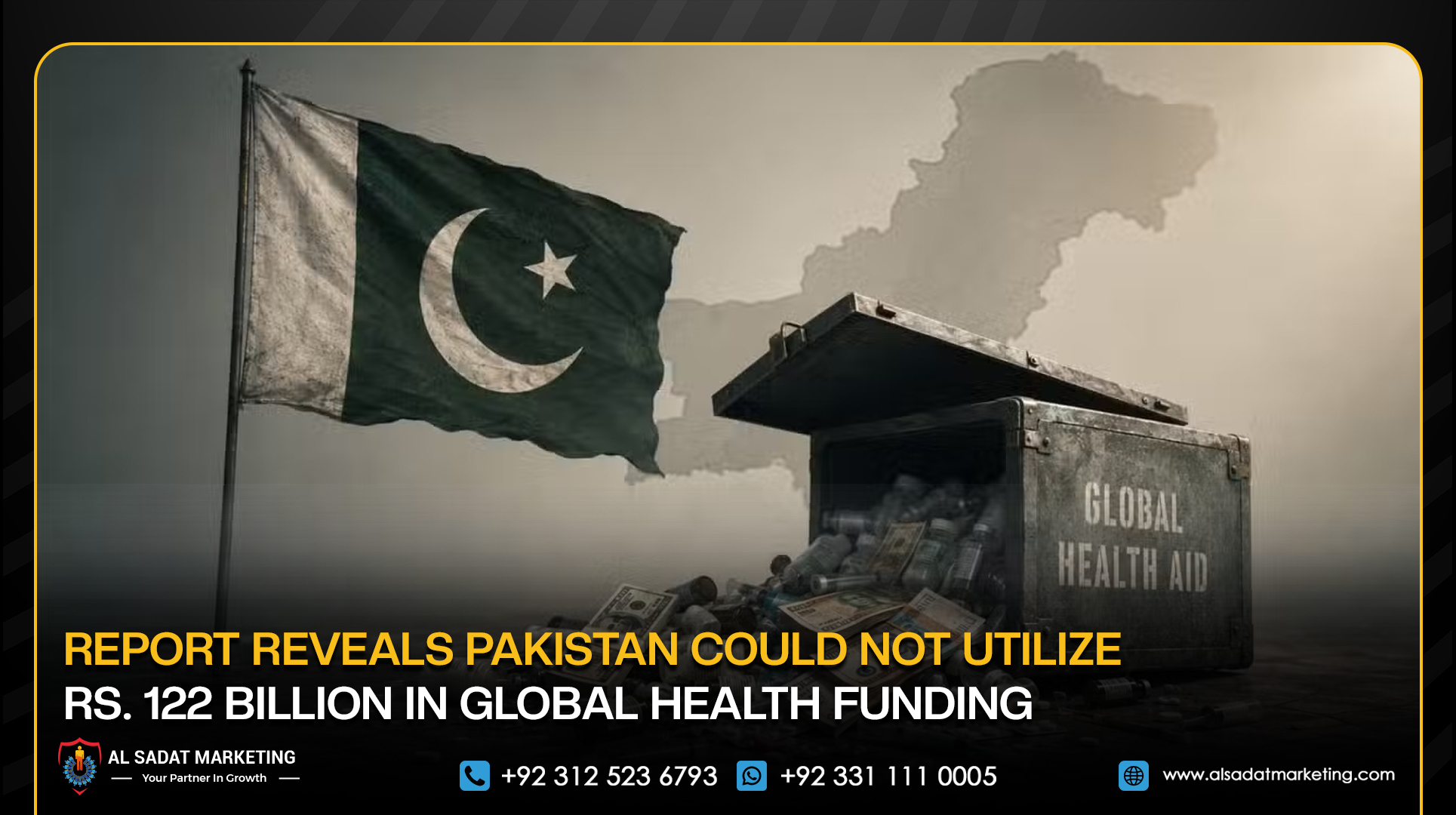
The Auditor General of Pakistan has uncovered significant shortcomings in the management of Global Fund grants, revealing that more than Rs. 122 billion in international health assistance was either lost, underutilized, or missed due to poor governance, weak oversight, and administrative inefficiencies.
According to the latest audit report, the Ministry of National Health Services managed Global Fund assistance totaling Rs. 156.5 billion between 2015 and 2023. The funding was allocated to support national programs addressing HIV, tuberculosis (TB), and malaria.
The audit found that over Rs. 122 billion in available funding failed to deliver its intended impact because of implementation failures and missed financing opportunities. An additional Rs. 34.5 billion remained tied up in delayed procurement, stalled infrastructure projects, and other operational bottlenecks.
One of the most significant findings was the government’s failure to secure $22.9 million in additional catalytic funding after officials did not submit the required Integrated Funding Request. The report also highlighted financial irregularities, including $11.476 million in discrepancies related to in-kind disbursements, $2.442 million lost due to prohibited practices involving a private principal recipient, and $2.197 million worth of donor-funded medicines that expired before distribution.
The audit also pointed to serious shortcomings in Pakistan’s tuberculosis control program. Auditors reported that underperformance in TB diagnosis and treatment resulted in missed funding opportunities worth $336.84 million, while another $3.68 million allocated for TB-related activities remained unused.
Infrastructure projects financed through international assistance also experienced significant delays. According to the report, the United Nations Development Programme (UNDP) did not install 36 Pressure Swing Adsorption (PSA) oxygen plants valued at Rs. 10.78 billion. Similarly, the United Nations Office for Project Services (UNOPS) failed to install nine medical waste incinerators worth Rs. 553.46 million.
The Auditor General further identified Rs. 2.4 billion held in unauthorized bank accounts, theft of insecticide-treated mosquito nets valued at approximately Rs. 230 million, medicines worth Rs. 41.5 million accepted despite having short remaining shelf lives, and laboratory equipment worth Rs. 24.27 million that remained unused in storage facilities for up to 12 years.
The report also found that Pakistan failed to meet several HIV diagnosis and treatment targets despite having sufficient financial resources, resulting in a funding gap of $24.85 million. In addition, auditors questioned $39.395 million in salary payments made to employees of sub-recipient organizations without proper attendance verification.
The Auditor General attributed these issues to systemic weaknesses in governance, inadequate financial controls, and ineffective program oversight within the Ministry of National Health Services. As a result of these deficiencies, Pakistan’s Global Fund program was placed under the donor’s Additional Safeguard Policy, which provides increased financial monitoring and oversight.
To improve accountability and strengthen future management of international health grants, the Auditor General recommended enhancing internal audit systems, integrating supply chain management, ensuring transparent procurement procedures, implementing merit-based appointments, and including the Auditor General’s Office in the Country Coordinating Mechanism responsible for overseeing Global Fund grants.