

Researchers at Princeton University have developed a 3D device that combines living brain cells with advanced electronics in a single system.
The device is designed to study brain activity, neurological diseases, and low-power computing by recognizing patterns in electrical signals from neurons.
Earlier experiments in this field used flat 2D cell cultures or simple 3D clusters that were only observed and stimulated from outside. The new system takes a different approach by interacting directly within the neural network.
The team built a 3D mesh made of microscopic metal wires and electrodes, supported by a flexible epoxy coating. This structure allows neurons to grow around it and form a connected network.
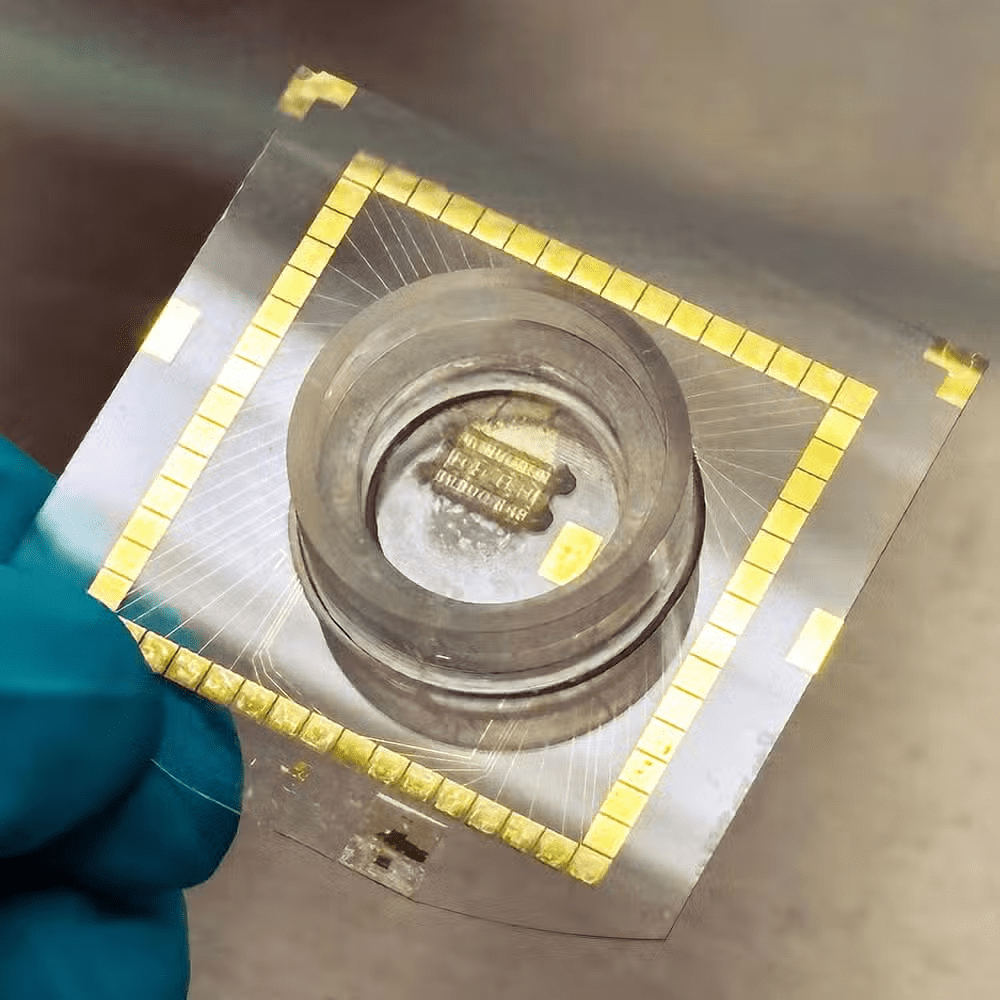
Around 70,000 neurons were integrated into the system, linked through the 3D mesh. Dozens of tiny electrodes are used to monitor and control brain cell activity.
Over time, researchers observed how the network evolved and tested how connections between neurons could be strengthened or weakened. An algorithm was trained to identify patterns in the electrical signals.
In experiments, the system successfully distinguished between different spatial and temporal patterns.
The researchers believe the platform could be expanded in the future to perform more complex tasks and help advance both neuroscience and energy-efficient AI research.