
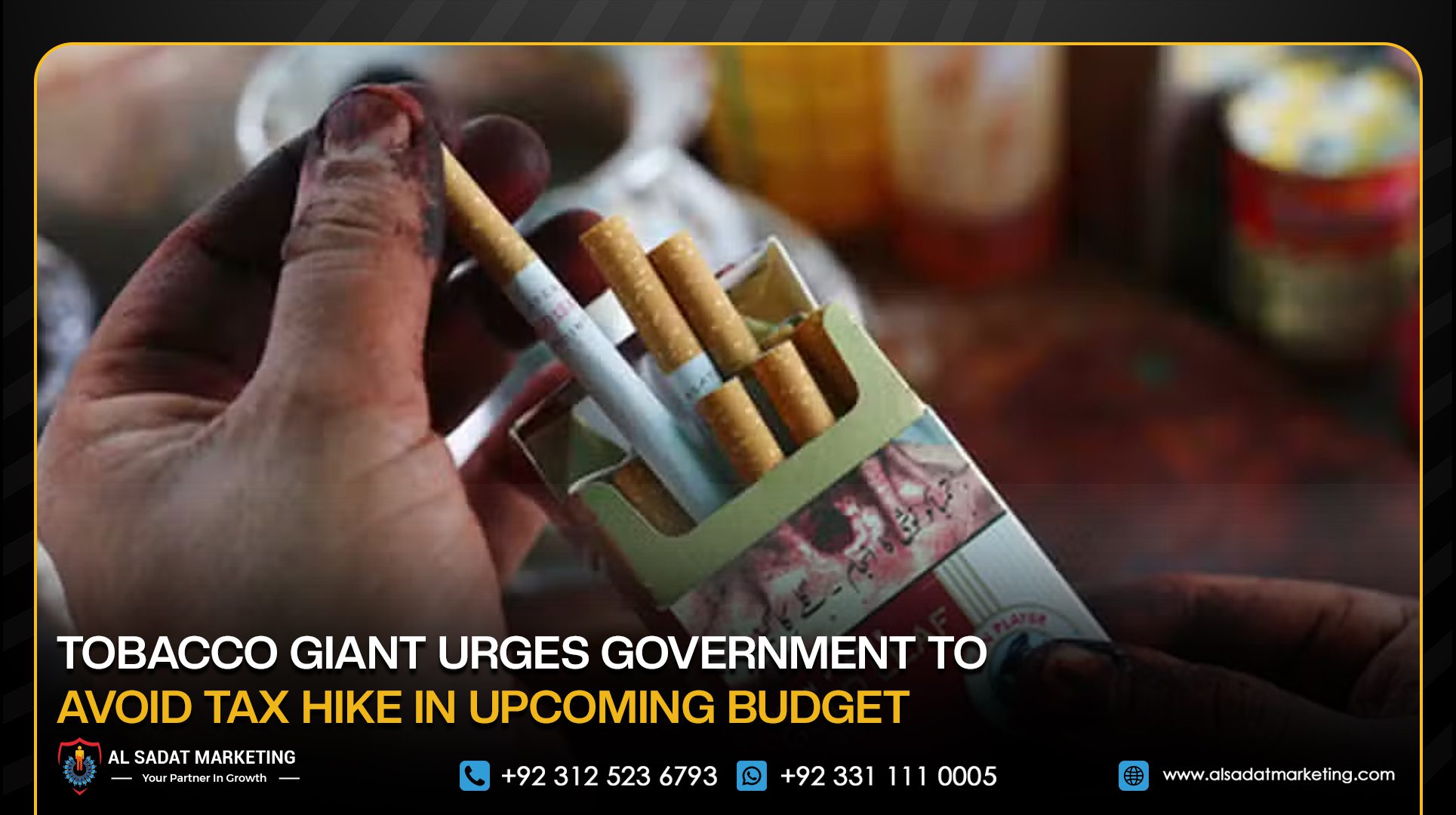
A senior representative of British American Tobacco (BAT) has called on the Pakistani government to avoid raising the Federal Excise Duty (FED) on cigarettes in the upcoming 2026–27 federal budget, warning that further tax hikes could worsen the country’s already large illicit tobacco market.
Speaking to journalists, Simon Trussler, BAT’s Group Head of International Trade and Fiscal Affairs, emphasized the need for tax stability. He argued that consumers are no longer able to absorb sudden increases in excise duties, and unpredictable tax changes risk pushing more buyers toward illegal products.
Trussler noted that recent stability in cigarette taxation has shown encouraging signs, including improved legal sales volumes. He urged policymakers to focus on consistency rather than abrupt fiscal measures.
According to him, Pakistan now ranks among the countries with the largest illicit cigarette markets in the world. He estimated that illegal cigarettes account for around 55% of total market share, leading to significant tax evasion and revenue losses.
While acknowledging that the Federal Board of Revenue (FBR) is aware of the issue and has taken steps to address it, he stressed that the challenge remains substantial.
Trussler argued that steep tax increases introduced between 2022 and 2023 may have unintentionally boosted the illicit trade instead of increasing government revenues. Independent studies suggest that illegal cigarettes now dominate overall consumption in Pakistan.
Data shared during the briefing indicated that in 2023–24, nearly 58% of cigarettes consumed in the country were illicit, with around 85% produced locally. He described this as a policy failure, saying that taxation and enforcement must be designed together rather than handled separately.
Citing findings from Oxford Economics, Trussler said Pakistan’s tobacco tax policy has failed to meet its objectives of raising revenue and reducing smoking. Despite repeated tax hikes, total cigarette consumption has remained relatively stable at about 80 billion sticks annually since 2012, with demand shifting toward untaxed brands.
He explained that sharp tax increases have made legal cigarettes less affordable, driving consumers toward cheaper illegal alternatives instead of reducing overall smoking rates.
Following tax hikes of more than 100% above inflation between early 2022 and mid-2023, a significant price gap emerged between legal and illegal products. In 2023–24, illicit cigarettes were estimated to cost roughly 47% of the price of duty-paid brands, creating a strong incentive for consumers to switch.
Trussler also disputed claims by some global health organizations that higher taxes do not fuel illicit trade, arguing that international evidence shows a clear link between affordability and the growth of illegal markets.
He further pointed out that over 80% of cigarette price increases in Pakistan are driven by higher taxes. Meanwhile, very low pre-tax profit margins — ranked 173rd out of 184 countries in WHO data — have made it difficult for legitimate manufacturers to operate sustainably, increasing incentives for tax evasion.
On enforcement, Trussler said Pakistan’s track-and-trace system is a useful monitoring tool but cannot work effectively without consistent inspections and stronger supply chain controls.
He acknowledged recent enforcement efforts, including the seizure of 480 metric tons of acetate tow, 2.5 billion smuggled cigarettes, and 1.7 billion duty-unpaid cigarettes in 2025, along with the closure of 10 illegal factories. However, he stressed that sustained action across manufacturing, distribution, and retail is essential to effectively curb the illicit cigarette trade.