
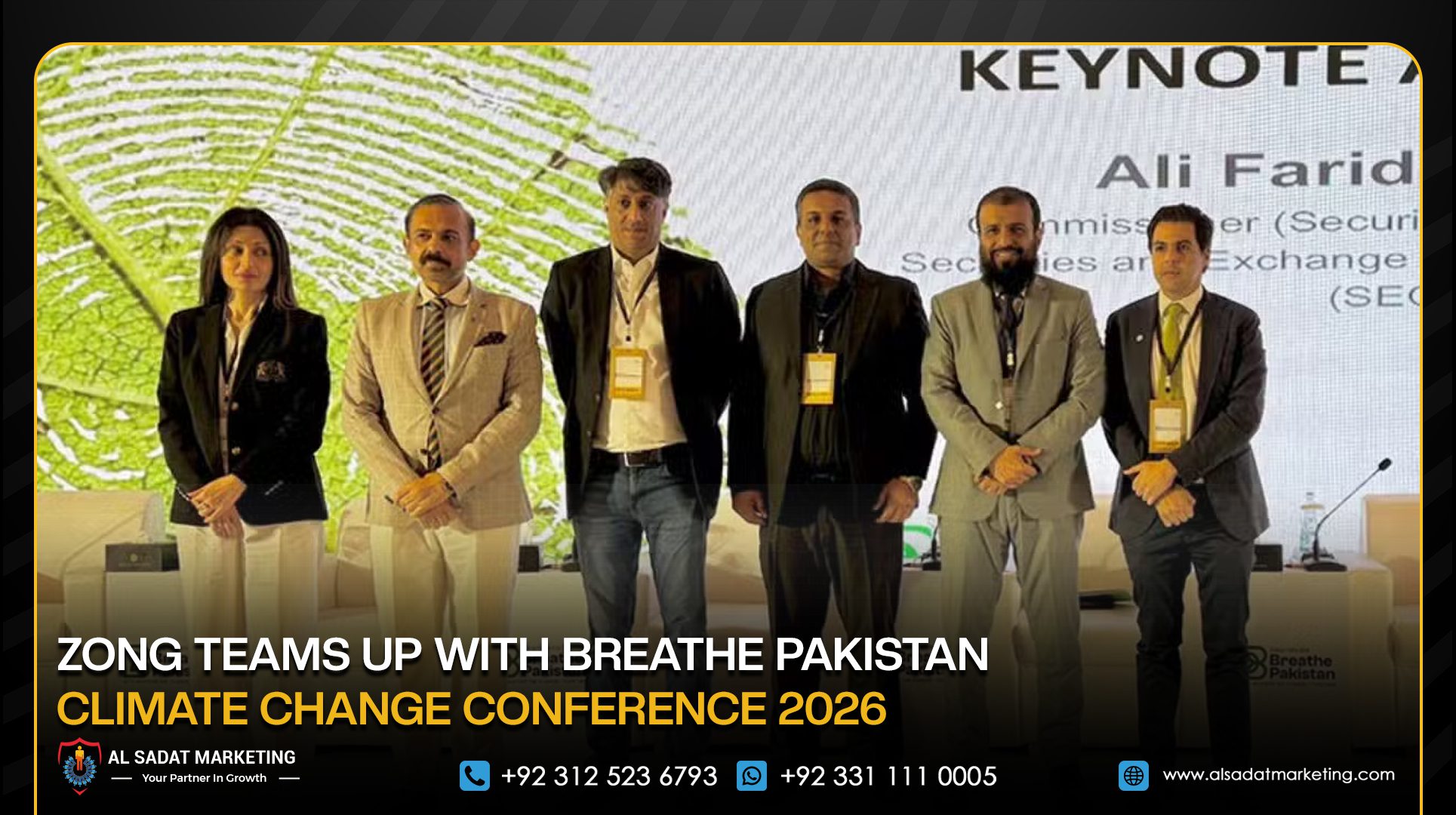
Zong has partnered with the Breathe Pakistan International Climate Change Conference 2026, a two-day platform that brought together policymakers, corporate leaders, development organizations, and climate experts to discuss Pakistan’s growing climate challenges.
The partnership comes as Pakistan continues to face increasing climate pressures, including floods, extreme heatwaves, worsening air quality, water shortages, and food insecurity. Despite contributing minimally to global emissions, Pakistan remains among the countries most vulnerable to climate change impacts.
Zong said it views climate action not only as an environmental responsibility but also as a strategic priority tied to operational resilience, governance, and long-term sustainability. Through its collaboration with the conference, the company reaffirmed its commitment to supporting Pakistan’s climate agenda through cross-sector cooperation and environmentally responsible technology practices.
A key session at the conference focused on the role of Pakistan’s private sector in climate action. The panel discussion, titled “From CSR to Climate Leadership – Mobilising Pakistan’s Private Sector for Climate Action,” featured Najeeb Ullah Khan alongside representatives from other industries.
During the discussion, Najeeb Ullah Khan emphasized the importance of public-private partnerships in building climate resilience. He said Zong is investing in energy-efficient infrastructure, renewable energy solutions, and intelligent network systems to reduce environmental impact while maintaining reliable communication services during climate-related emergencies.
According to the company, around 85 percent of Zong’s network sites have transitioned to solar and lithium-ion energy solutions, generating approximately 1.43 million kWh of clean energy annually.
Zong said these infrastructure upgrades played an important role during floods in Sindh and Balochistan by helping maintain uninterrupted connectivity for emergency responders and affected communities.
The company also highlighted its environmental initiatives beyond infrastructure development. In collaboration with Pakistan’s Ministry of Climate Change and Pak EPA, Zong has planted 3,500 indigenous trees in Islamabad as part of its sustainability efforts.
Additionally, the adoption of flexible work practices has reportedly helped the company save more than 22,000 kWh of energy each month as part of its broader low-carbon strategy.
Zong said it remains committed to integrating sustainability into its long-term business strategy while supporting Pakistan’s transition toward a more climate-resilient future.