
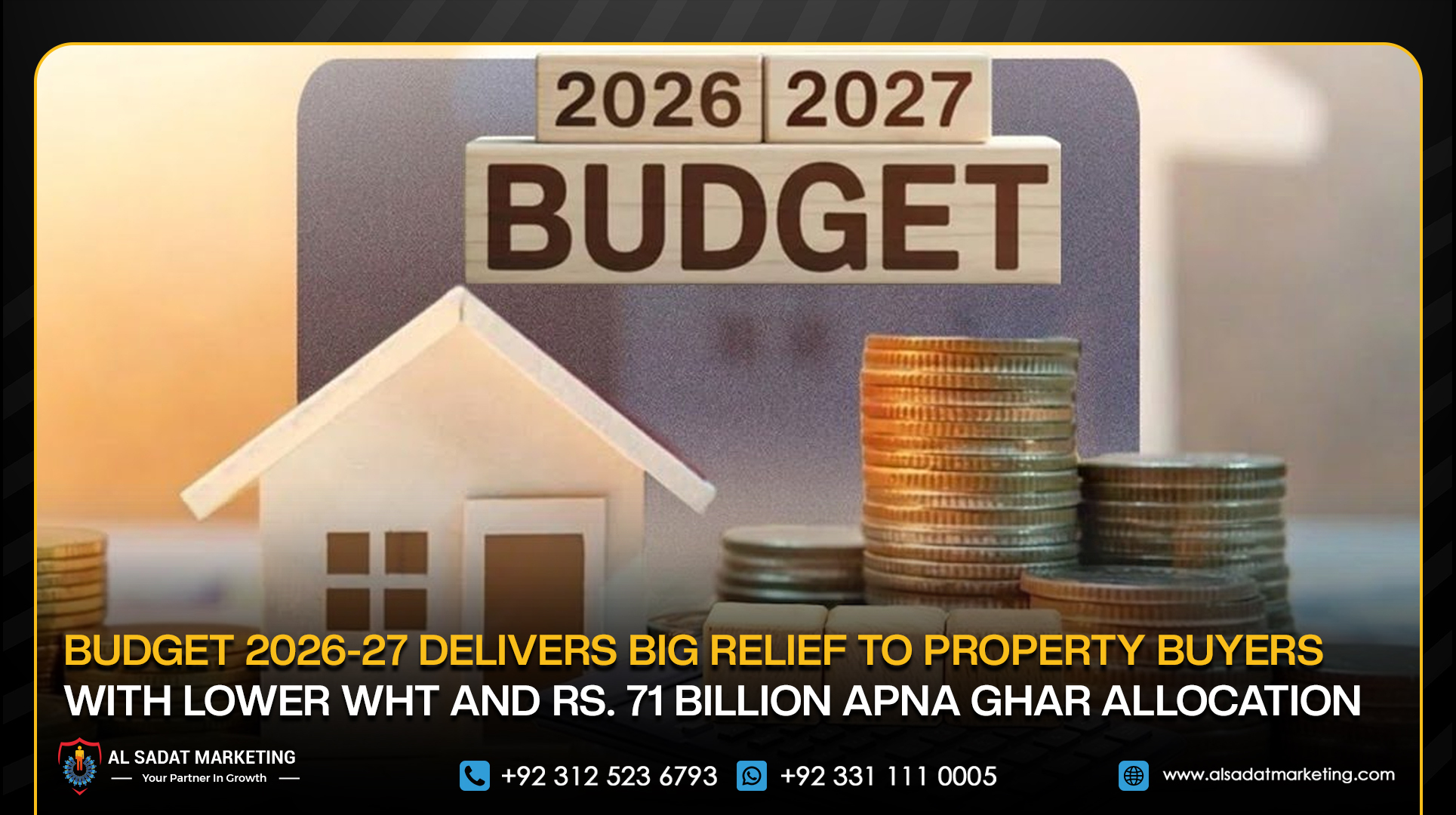
Islamabad: The federal government on Friday unveiled a Rs. 18.771 trillion federal budget for the fiscal year 2026-27, targeting 4% GDP growth while outlining a fiscal strategy focused on economic expansion, revenue mobilisation, and selective relief measures.
The total budget outlay marks a 7% increase compared to the Rs. 17.57 trillion allocated in FY26. Inflation for the upcoming fiscal year is projected at 8.2%, while the Federal Board of Revenue (FBR) has been assigned a revenue target of Rs. 15.26 trillion, reflecting an increase of over 8% year-on-year.
Rising Expenditures and Fiscal Pressures
On the expenditure side, interest payments are estimated at Rs. 8.054 trillion, up 16%, while pension costs are projected at Rs. 1.169 trillion, an 11% increase. Defence spending has been set at Rs. 3 trillion, showing a rise of 15.6%.
The Public Sector Development Programme (PSDP) has been allocated Rs. 1 trillion, aimed at financing infrastructure and development projects across the country.
Social Sector Allocations
Key social spending includes:
- Rs. 838 billion for the Benazir Income Support Programme (BISP)
- Rs. 46 billion for education initiatives
- Rs. 25.1 billion for health projects
- Rs. 13 billion for governance and institutional reforms
Tax Relief and Policy Changes
Among major relief measures, the government abolished the surcharge on salaried individuals and reduced the super tax by 2% for income above Rs. 500 million, excluding certain sectors such as banks, fertiliser, and exploration companies.
The export development surcharge of 0.25% has also been removed as part of efforts to support export competitiveness.
In the real estate sector, withholding tax (WHT) has been significantly reduced. For filers, the WHT on property purchases has been cut from 2.5% to 1.25%, while the tax on property sales has been reduced from 5.5% to 2.75%.
For exporters, advance income tax and minimum tax rates have been reduced from 2% to 1.25%, while withholding tax on international credit and debit card transactions has been lowered from 5% to 0.5%.
Housing and Retail Sector Measures
The government has allocated Rs. 71 billion under the Prime Minister’s Apna Ghar Programme to support affordable housing initiatives.
For the retail sector, a fixed tax regime has been introduced under the Asaan framework for retailers earning up to Rs. 200 million annually, requiring either a minimum payment of Rs. 25,000 or 1% of sales.
Additionally, the minimum tax rate for distributors and wholesalers has been increased from 0.25% to 0.5%, alongside revisions in Federal Excise Duty (FED), including new levies on SUVs (2000–3000cc) and petroleum-based solvents.
Economic Outlook
The government stated that the FY2026-27 budget aims to balance fiscal consolidation with targeted relief measures, focusing on stabilisation, improved compliance, and gradual economic recovery while supporting key growth sectors of the economy.