
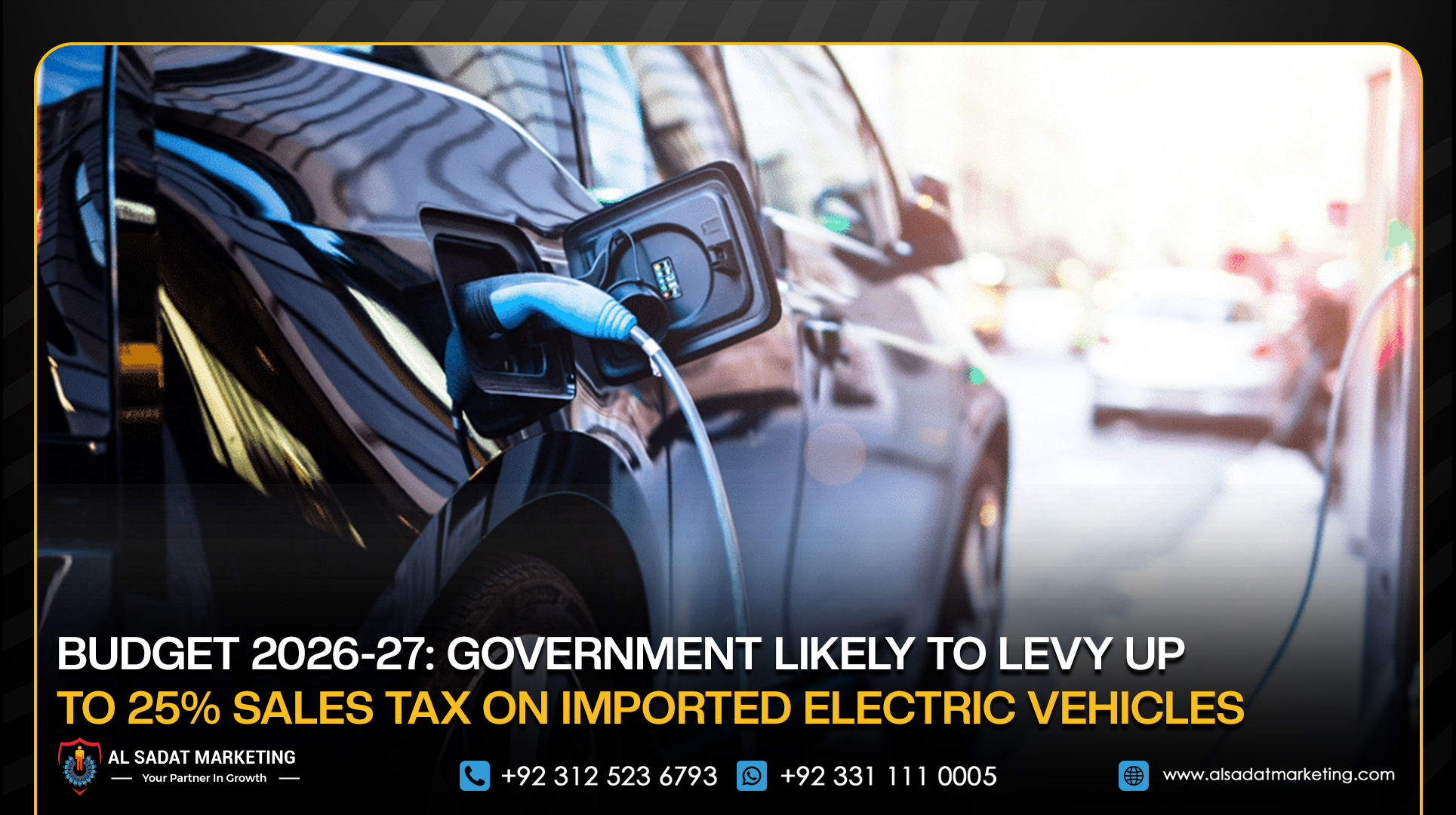
The government is expected to introduce a sales tax of up to 25 percent on imported electric vehicles (EVs) in the upcoming Budget 2026-27, while maintaining the existing tax structure for hybrid vehicles.
According to sources, several tax incentives currently available to the EV sector are scheduled to expire on June 30, 2026. Among them is the sales tax exemption on the import of completely knocked down (CKD) kits used by local manufacturers to assemble electric vehicles.
The exemption currently covers small electric cars and SUVs with battery capacities of up to 50 kWh, as well as light commercial vehicles (LCVs) equipped with batteries of up to 150 kWh.
At present, locally assembled or manufactured four-wheel electric vehicles falling within these approved battery limits benefit from a reduced sales tax rate of 1 percent, a concession that is also due to expire at the end of June 2026.
In comparison, hybrid electric vehicles assembled locally continue to enjoy lower sales tax rates ranging from 8.5 percent to 12.75 percent, and officials indicate these rates are likely to remain unchanged in the next fiscal year.
Meanwhile, the Senate Standing Committee on Finance has approved the Customs (Amendment) Bill, 2026, which seeks to implement financial measures outlined in the Automotive Industry Development and Export Policy (AIDEP) 2021-26. The committee unanimously endorsed the proposed legislation after detailed discussions.
The government has also proposed extending customs duty concessions on the import of EV parts and components until June 30, 2026, as part of efforts to support green mobility and promote domestic EV manufacturing.
Pakistan’s original EV policy, approved by the federal cabinet in June 2020, introduced concessional customs duties for EV-specific components used in electric two- and three-wheelers, heavy commercial electric vehicles, and the conditional import of fully built electric vehicles by manufacturers. These incentives were incorporated into the Finance Act 2020 through amendments to the Fifth Schedule of the Customs Act, 1969.
Later, under AIDEP 2021-26, the federal cabinet extended these concessions through June 2026 and expanded their scope to include EV-specific parts for light commercial vehicles and vans on terms similar to those offered to other four-wheel electric vehicles.
Officials say the latest amendments are intended to align the concessions provided under AIDEP with the provisions already listed in the Fifth Schedule of the Customs Act.
Additionally, the Customs (Amendment) Bill, 2026 proposes extending customs duty concessions on the import of completely built electric vehicles (CBUs) until June 30, 2026. The relief would apply to up to 10 units of the same vehicle variant intended for local assembly or manufacturing, with a maximum limit of 200 units for the electric two- and three-wheeler segments.
The proposed measures reflect the government’s attempt to balance revenue generation with continued support for the country’s transition toward cleaner and locally manufactured transportation solutions.