
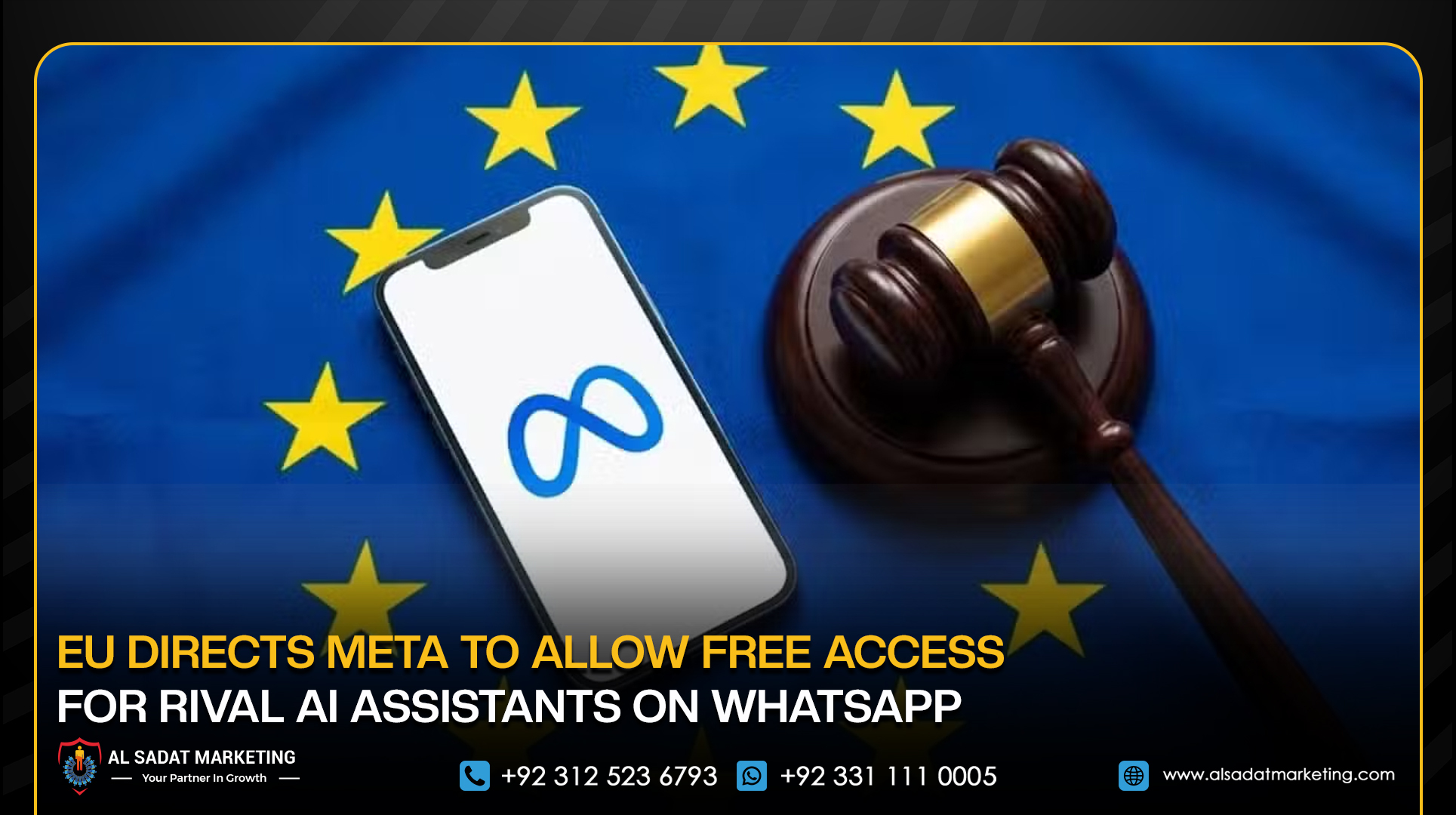
The European Commission has ordered Meta to restore free access to WhatsApp for rival AI assistants while an ongoing antitrust investigation continues into the company’s conduct.
The interim order requires Meta to reinstate access for competing AI providers to the WhatsApp Business API under the same conditions that existed before the policy changes introduced in October 2025. Meta has been given five working days to comply.
Meta’s Policy Change
The case centers on Meta’s October 2025 update to its WhatsApp Business Solution Terms, which restricted third-party general-purpose AI assistants from accessing the WhatsApp Business API.
The policy came into effect in January 2026 and effectively left Meta AI as the only assistant able to use the platform through that channel.
The WhatsApp Business API enables companies to connect their systems with WhatsApp to communicate with users. Regulators are now assessing whether Meta leveraged this infrastructure to give its own AI assistant an unfair competitive advantage.
Complaints were submitted by several AI developers, including The Interaction Company, French startup Agentik, and a Spanish competitor. These complaints led the European Commission to open a formal investigation in December 2025.
Impact on Rival AI Services
The policy change forced several competing AI providers to scale back or exit WhatsApp integration.
OpenAI previously stated that more than 50 million users had accessed ChatGPT through WhatsApp before advising a migration to its standalone application. Microsoft later announced that Copilot’s WhatsApp integration would also be discontinued following Meta’s policy update.
Although Meta reopened access for rival AI assistants in March 2026, it introduced a fee-based structure. The European Commission later argued that these fees were excessively high and effectively limited competition.
EU Interim Measures and Regulatory Action
In February 2026, the Commission issued formal objections, stating its preliminary view that Meta may have violated EU antitrust rules. Further objections followed in April after the introduction of access fees.
The latest decision introduces interim measures, a rare regulatory tool used when authorities believe competition may suffer irreversible harm before a final ruling is reached. The order will remain in effect until the investigation concludes or until June 2029 at the latest.
EU Competition Chief Teresa Ribera said that rapidly evolving AI markets require timely intervention to ensure fair competition is maintained before dominant positions become entrenched.
Meta’s Response and Appeal
Meta has rejected the decision and confirmed it will appeal. A company spokesperson stated that the European Commission is effectively forcing Meta to provide free access to a paid WhatsApp Business service for large AI companies.
The company further argued that this approach could place an unfair burden on European businesses that currently pay for access to the service, effectively subsidizing global AI providers.
Implications for WhatsApp Users
The decision does not affect standard WhatsApp messaging or everyday user experience.
The case specifically concerns which AI assistants are permitted to operate through WhatsApp’s business infrastructure. If rival providers regain access, users in Europe could see a broader range of AI tools integrated into the platform.
The outcome of the case may also influence how regulators approach competition and AI distribution across major digital platforms in the future.