
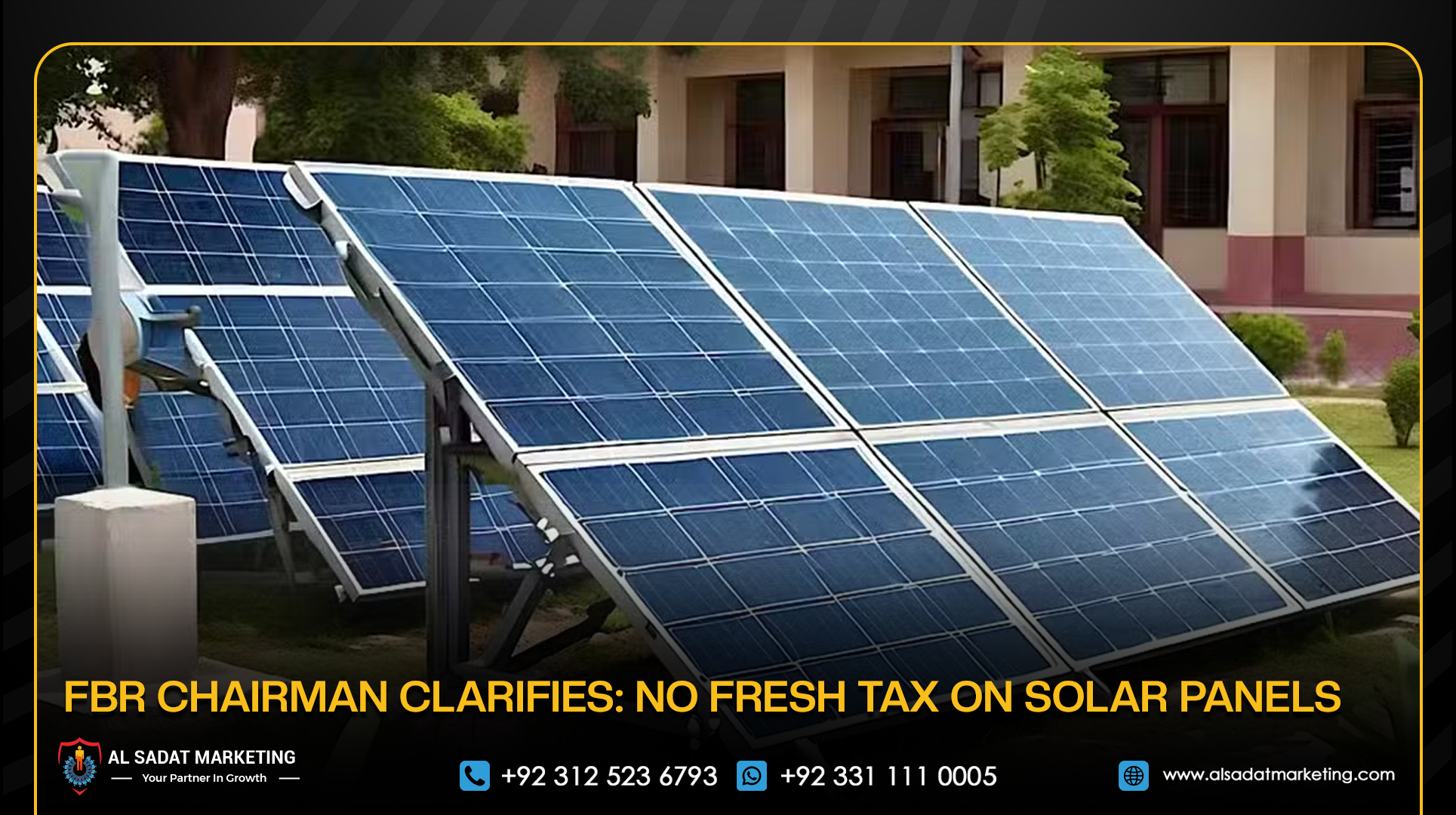
The Federal Board of Revenue (FBR) has clarified that no new taxes have been imposed on solar panels under the Budget 2026-27, dismissing concerns about additional taxation on the renewable energy sector.
Speaking during a technical briefing on the federal budget, FBR Chairman Rashid Mahmood Langrial said the growing adoption of solar energy had played a significant role in shielding consumers from rising electricity costs. He noted that the shift towards solar power had helped ease pressure on households and businesses grappling with high utility tariffs.
FBR Member Inland Revenue Hamid Atiq Sarwar reiterated that the budget contained no fresh tax measures targeting solar panels. The clarification comes amid public debate over the government’s stance on renewable energy, as an increasing number of consumers have turned to solar solutions in response to recurring power shortages and escalating electricity prices.
During the briefing, officials also outlined a number of proposed tax and enforcement measures aimed at broadening the tax base and improving compliance.
Among the key proposals is a 5 percent tax on income earned through social media platforms and digital content creation. Sarwar said individuals generating income through online platforms, including influencers and content creators on applications such as TikTok, would fall under the proposed tax regime as part of efforts to document emerging sectors of the digital economy.
At the same time, the FBR said relief measures had been introduced for freelancers and the information technology sector through separate budget proposals designed to encourage exports and support the country’s expanding digital industry.
Officials further announced reductions in taxes on airline tickets and online purchases made through credit cards, describing the measures as part of broader efforts to facilitate both consumers and businesses.
In the automobile sector, new taxation measures have been proposed for vehicles with engine capacities exceeding 2,000cc, while tax rates for smaller vehicles will remain unchanged.
Sarwar said the government had set an ambitious revenue collection target of Rs15.264 trillion for the upcoming fiscal year and emphasised that the focus of the budget was on strengthening enforcement rather than introducing widespread new taxes.
“Most of the measures introduced this time relate to enforcement,” he said, adding that enhanced compliance initiatives were expected to generate approximately Rs600 billion in additional revenue.
Highlighting the challenges facing the tax system, Sarwar noted that only around 600,000 of Pakistan’s estimated four million shopkeepers were currently registered with tax authorities. However, he clarified that the proposed trader scheme in Islamabad would not apply to individuals owning multiple shops, and routine inspections of small businesses would not be conducted unless unusual spending patterns or discrepancies were identified.
The FBR official also raised concerns about the sustainability of the existing tax structure, pointing out that the government had collected Rs322 billion through the super tax. He argued that tax rates should eventually move towards more balanced and sustainable levels.
In addition, the Budget 2026-27 proposes higher duties on e-cigarette liquids as part of the government’s efforts to discourage tobacco consumption while generating additional revenue.
Sarwar added that doctors, engineers, and other professionals would continue to be taxed at the existing rate of 15 percent under the current framework.