
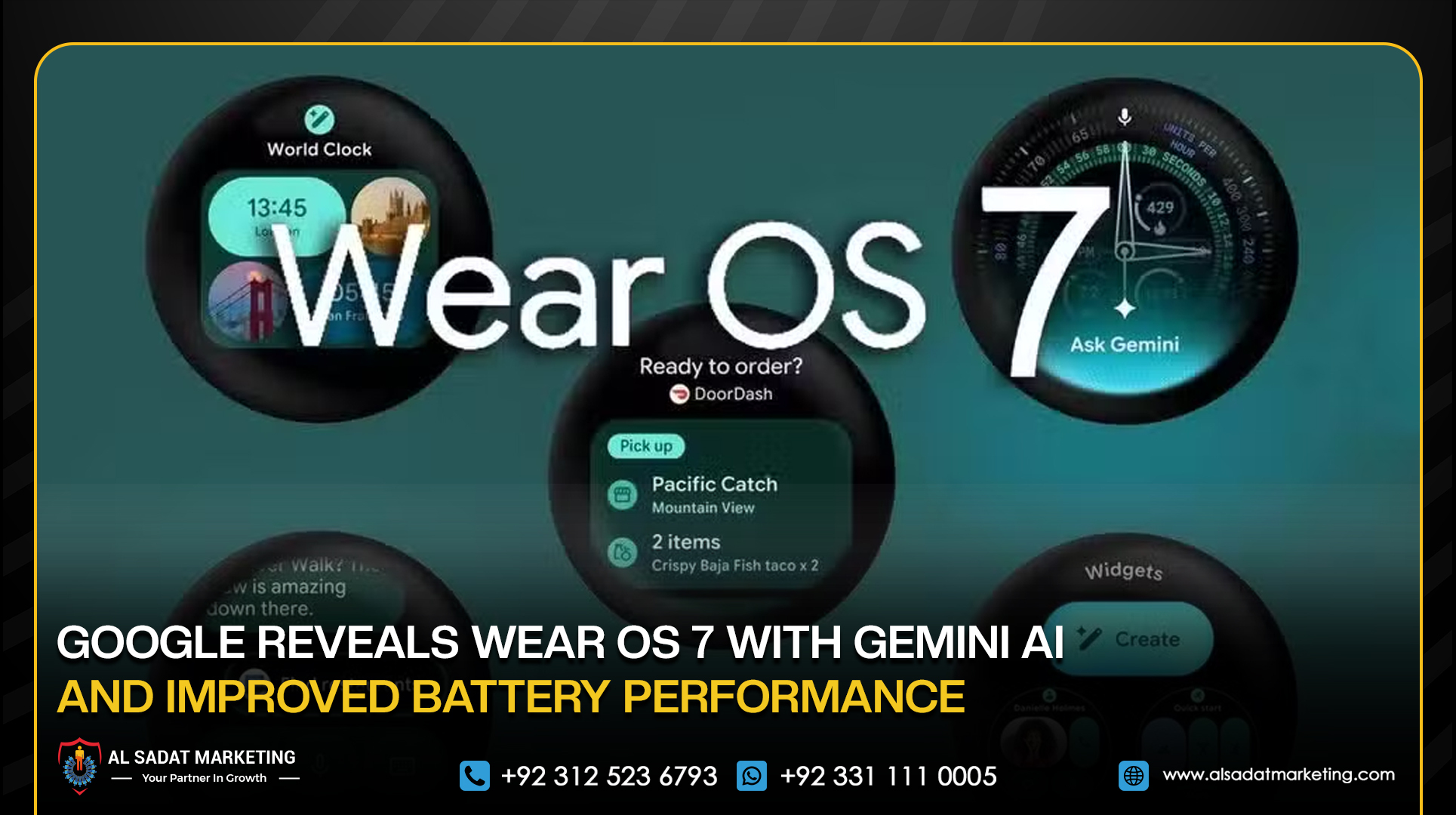
At Google I/O 2026, Google officially introduced Wear OS 7, the next major update for its smartwatch platform. Built on Android 17, the new version focuses on battery efficiency, deeper AI integration, and a redesigned smartwatch experience.
Developers can already access the Wear OS 7 Canary Emulator, while the full rollout for supported smartwatches is expected later this year.
Wear OS 7 Promises Improved Battery Life
One of the biggest upgrades in Wear OS 7 is improved power efficiency.
Google says smartwatches upgrading from Wear OS 6 could see up to 10% better battery life through software optimization alone, without requiring new hardware or updated chipsets.
For devices using features like continuous heart-rate tracking, ambient display mode, and all-day health monitoring, the update could provide several additional hours of battery usage depending on the smartwatch model.
The improvements come from tighter integration with Android 17’s updated power management system, which helps reduce background activity and unnecessary processing.
Google Replaces Tiles With Wear Widgets
Google is also replacing the older Tiles interface with a new system called Wear Widgets.
Previously, Tiles worked as swipeable cards with limited customization options. With Wear Widgets, Google is moving closer to Android’s standard widget system already used on smartphones and tablets.
The new widgets will support layouts like 2×1 and 2×2, making it easier for developers to bring existing Android widgets directly to smartwatches without building separate interfaces.
AI Widgets Can Sync From Phone to Smartwatch
Wear OS 7 will support AI-powered widgets created using Android’s “Create My Widget” feature.
Users will be able to generate personalized widgets for routines, sports scores, smart home controls, and other tasks directly from their phones. These widgets can then sync automatically to connected smartwatches.
Google says this approach is designed to make the smartwatch feel like a natural extension of the user’s smartphone experience.
Gemini AI Arrives on Select Smartwatches
Google is also bringing Gemini AI features to select smartwatches launching later in 2026.
However, Gemini Intelligence will require support for Gemini Nano v3 hardware, meaning the feature will likely remain limited to flagship smartwatch models at launch.
Expected compatible devices may include future versions of the Pixel Watch and select Galaxy Watch models.
Older smartwatches receiving the Wear OS 7 update will still get most platform improvements but may not support Gemini AI features.
AppFunctions Adds Voice-Based App Controls
Wear OS 7 introduces a new developer API called AppFunctions, which allows Gemini AI to control third-party apps using natural voice commands.
For example, users could say commands like “start tracking my run,” and Gemini would automatically interact with compatible fitness apps without manually opening them.
The AppFunctions API will be available to all Wear OS 7 developers, even on devices that do not support Gemini Intelligence directly.
Live Updates Coming to Watch Faces
Google is also adding Live Updates support to Wear OS 7.
This feature allows smartwatches to display real-time information directly on watch faces, including:
- Food delivery progress
- Ride-sharing updates
- Sports scores
- Travel information
With features like Gemini AI, Live Updates, and Wear Widgets, Google appears to be positioning Wear OS 7 as a more intelligent and interactive smartwatch platform focused on quick actions and real-time information access.