
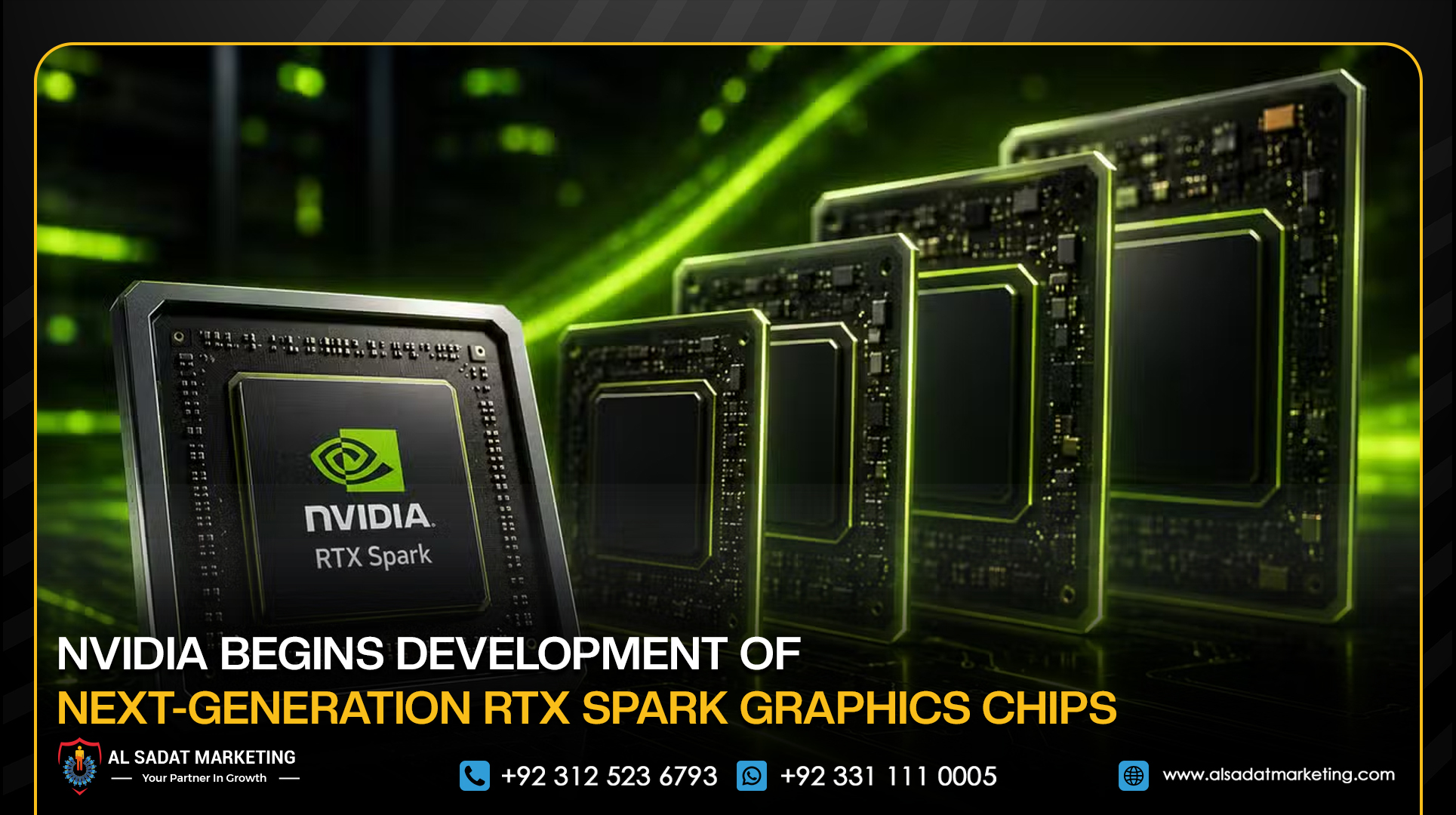
Nvidia CEO Jensen Huang has confirmed that the newly announced RTX Spark platform is only the beginning, with future generations already in development under the names N2X and N3X.
The announcement comes shortly after Nvidia unveiled RTX Spark at Computex 2026, introducing a new AI-focused computing platform designed for laptops and compact desktops capable of running advanced AI applications locally.
RTX Spark is aimed at users who want to process AI workloads directly on their devices rather than relying heavily on cloud-based services. The platform combines Nvidia’s Grace ARM-based CPU with a Blackwell RTX GPU, creating a system optimized for AI agents, content creation, and gaming.
One of the platform’s standout features is support for up to 128GB of unified memory, allowing the CPU and GPU to share the same memory pool. This setup is expected to improve performance when running large AI models and complex AI-driven workflows.
According to Nvidia, the top-end RTX Spark configuration can deliver up to 20 CPU cores, 6,144 CUDA cores, and as much as 1 petaflop of AI computing power.
Nvidia Confirms N2X and N3X Roadmap
Huang revealed that RTX Spark was internally known as N1X, and that successor chips named N2X and N3X are already part of Nvidia’s future roadmap.
The move signals that Nvidia sees RTX Spark as a long-term computing platform rather than a single-generation product. The company is positioning these systems as the foundation for a new era of AI-powered personal computers capable of running autonomous AI assistants and intelligent workflows locally.
First RTX Spark Devices Arrive Later This Year
The first wave of RTX Spark-powered laptops and mini PCs is expected to launch this fall from major manufacturers including Asus, Dell, HP, Lenovo, Microsoft Surface, and MSI, with additional models from Acer and Gigabyte expected later.
Microsoft has already showcased its upcoming Surface Laptop Ultra, powered by RTX Spark, targeting developers, creators, and professionals who require powerful on-device AI capabilities.
Nvidia’s Vision for AI-Powered PCs
Jensen Huang described future computers as intelligent assistants that can continuously work alongside users rather than simply responding to commands.
Nvidia believes AI PCs will increasingly run local AI agents, automate complex tasks, and provide more natural interactions without depending entirely on remote cloud infrastructure.
Competition Heats Up in the PC Market
With RTX Spark, Nvidia is moving deeper into the Windows PC processor market, where it will compete directly with Intel, AMD, and Qualcomm.
The success of the platform will depend on factors such as performance, battery efficiency, software support, and real-world AI applications. However, Nvidia’s early commitment to future generations suggests the company is making a serious long-term push into AI-powered personal computing.
If the first RTX Spark devices deliver on expectations, Nvidia could become a major player in the next generation of premium laptops and compact desktop PCs.