
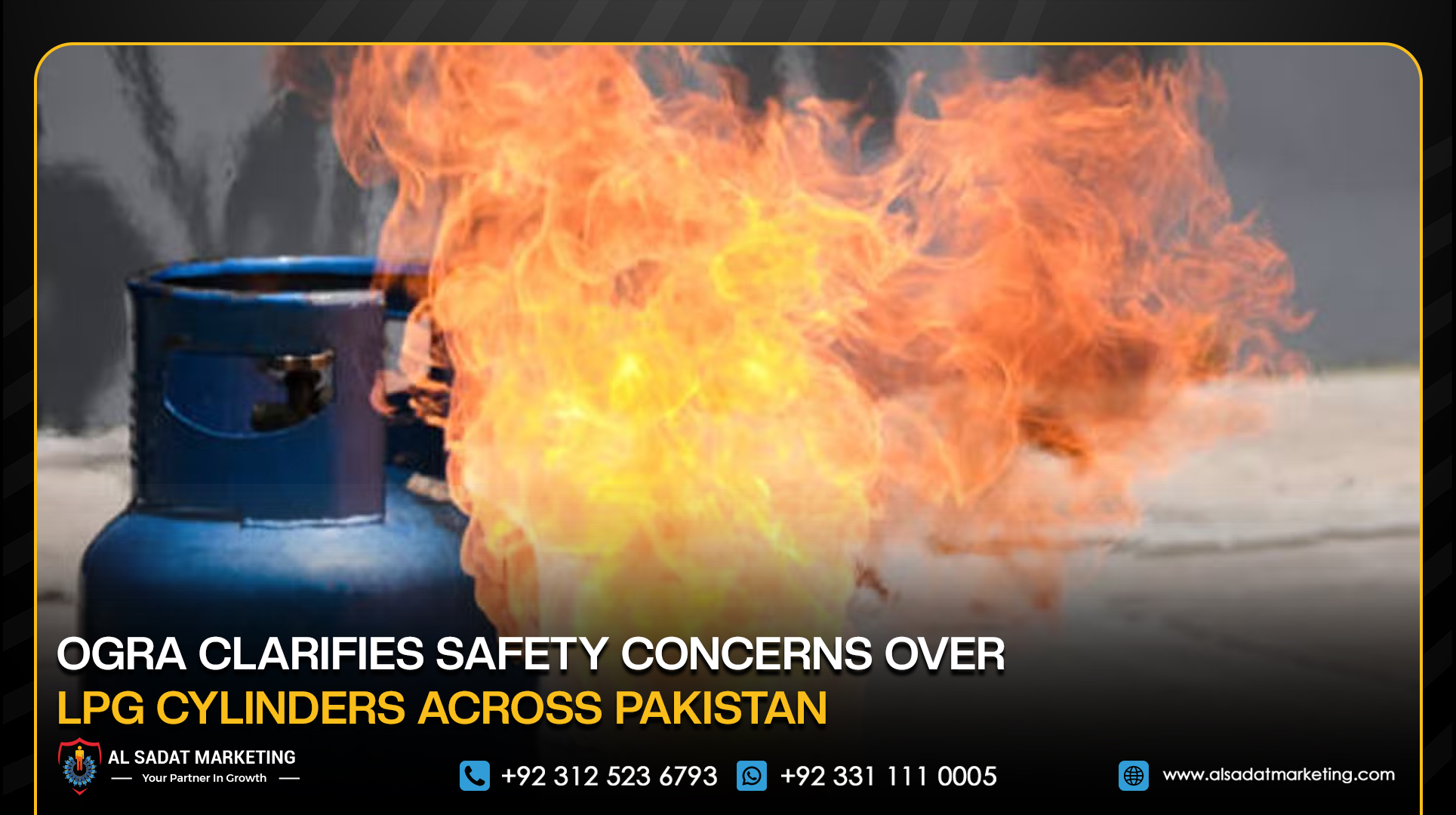
The Oil and Gas Regulatory Authority (OGRA) has rejected a viral social media claim suggesting that domestic LPG cylinders carrying codes such as “A-26” or “D-26” will become unsafe or expire in 2026.
The misleading posts circulating online claimed that these markings represent expiry dates and warned consumers that cylinders with such codes could pose safety risks, including explosions. OGRA has clarified that these claims are false and have no basis in the cylinder certification system used in Pakistan.
According to the regulator, LPG cylinders do not use coding formats such as “A-26” or “D-26” to indicate expiration dates. Instead, cylinders are marked with technical details including the manufacturing date, serial number, batch number, manufacturer information, water capacity, weight, and the date of the next mandatory inspection.
OGRA stated that LPG cylinders manufactured in Pakistan comply with internationally recognized standards, including DOT 4B, DOT 4BW, and DOT 4BA specifications, which ensure safety and quality requirements are met.
The authority emphasized that certified LPG cylinders are safe for use under normal conditions and do not become hazardous simply because of their age. Cylinders undergo regular inspections, testing, and maintenance procedures to ensure continued safe operation.
Chairman of the LPG Distributors Association, Irfan Khokhar, also dismissed the viral claims and said that OGRA-approved manufacturers follow strict international production and safety standards.
He explained that LPG cylinders pass through more than 20 manufacturing stages before reaching consumers and are designed for long-term use. However, they must undergo mandatory inspections and refurbishment every five years to maintain safety standards.
Khokhar cautioned consumers against purchasing cylinders from unapproved manufacturers, warning that uncertified products may not meet regulatory requirements and could present genuine safety risks.
The clarification comes amid growing misinformation on social media regarding LPG cylinder safety, with authorities urging consumers to rely on official sources for accurate information.