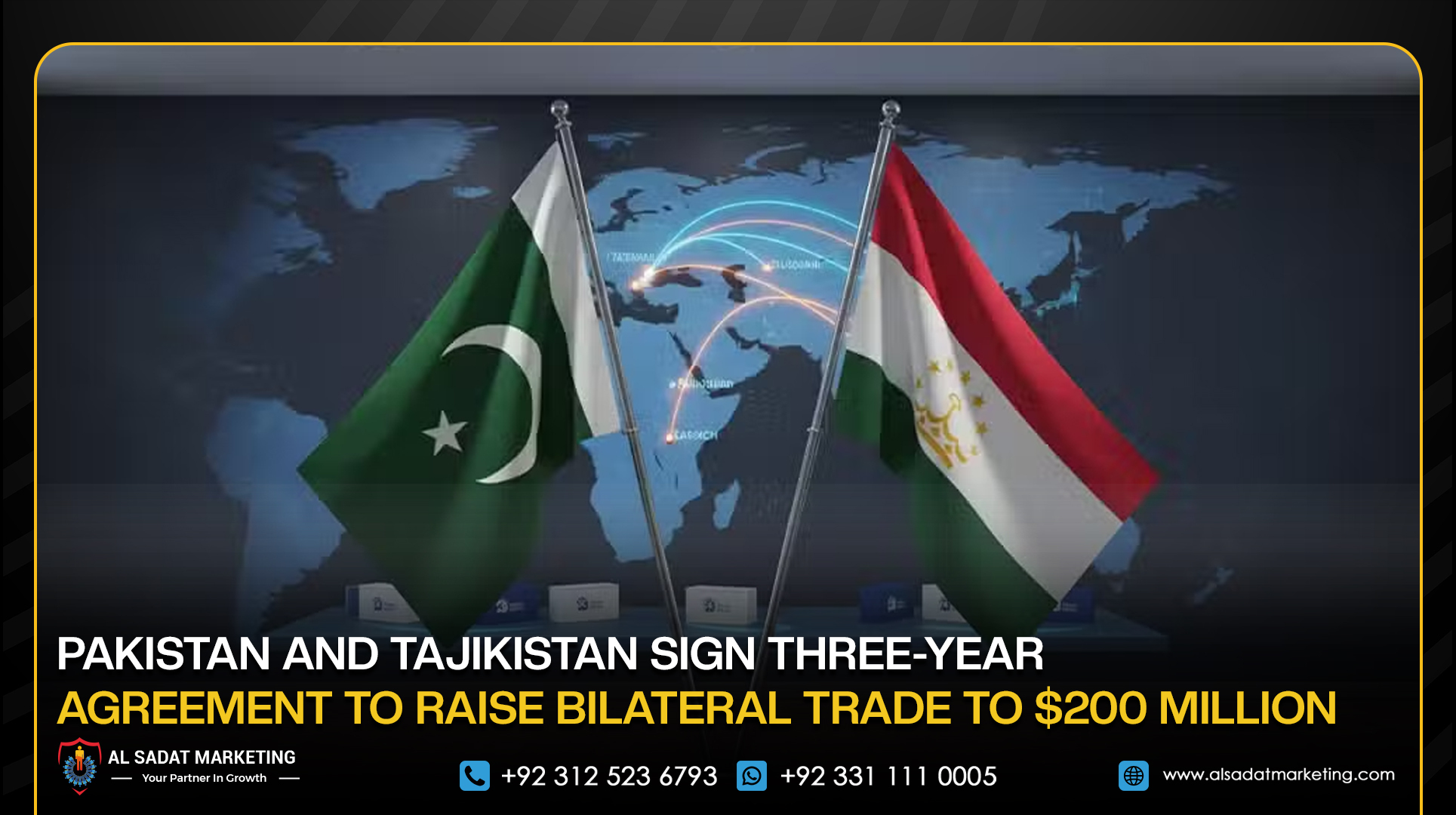
Pakistan and Tajikistan have agreed on a three-year roadmap aimed at increasing bilateral trade to $200 million, while also expanding cooperation in energy, agriculture, information technology, healthcare, education, and investment.
The agreement was reached during the 8th Session of the Joint Commission on Trade, Economic and Scientific-Technical Cooperation, held in Dushanbe, Tajikistan.
The Tajik delegation was led by Jum’a Daler Shofaqir, Minister of Energy and Water Resources, while Pakistan was represented by Federal Minister for Energy Sardar Awais Ahmad Khan Leghari. Senior officials from Pakistan’s Economic Affairs Division, Ministry of Commerce, State Bank of Pakistan, and other government departments also attended the meeting.
Focus on Expanding Trade
Both countries agreed to strengthen economic ties through regular exchange of trade information, participation in trade exhibitions, business forums, and greater collaboration between chambers of commerce.
The two sides also decided to organize trade delegations, business-to-business (B2B) meetings, and virtual networking sessions to help businesses identify new opportunities and increase commercial activity.
A major outcome of the meeting was the agreement to develop a structured three-year plan to raise bilateral trade volume to $200 million, supported by greater tariff transparency and the identification of key sectors for growth.
Progress on Trade Agreements
Pakistan and Tajikistan welcomed progress on several bilateral initiatives, including a memorandum of understanding between Tajikistan’s export agency and Pakistan’s Trade Development Authority.
Discussions on a preferential trade agreement also moved forward, with both countries agreeing to speed up negotiations and finalize the arrangement at the earliest opportunity.
The two sides further agreed to strengthen cooperation between Tajikistan’s state material reserves agency and Pakistan’s Trading Corporation to facilitate government-to-government procurement.
Energy Cooperation Remains a Priority
Energy remained one of the key areas of discussion.
Both countries reviewed progress on the CASA-1000 electricity transmission project, which is designed to export surplus electricity from Central Asia to South Asia.
Officials stressed the importance of completing the project on time and confirmed participation in a joint working group meeting scheduled to take place in Istanbul in June 2026 to address remaining operational and commercial matters.
Tajikistan also expressed interest in exploring investment opportunities for Pakistan Petroleum Limited (PPL) and Oil and Gas Development Company Limited (OGDCL) in its energy sector. The two countries agreed to cooperate on technical training programs for oil and gas professionals.
Cooperation in Industry and Technology
The meeting also explored opportunities for joint ventures in several industries, including:
- Pharmaceuticals
- Artificial leather
- Footwear manufacturing
- Chemical products
- Light industry
Pakistan offered to provide training in digital marketing, e-commerce, freelancing, and content creation to support the development of Tajikistan’s technology sector.
Agriculture and Food Security Collaboration
Both countries agreed to expand cooperation in agriculture by sharing information on crop production, seasonal produce trade, and high-yield seed varieties.
Discussions covered crops such as:
- Cotton
- Wheat
- Potatoes
- Vegetables
Officials also agreed to finalize an agriculture cooperation roadmap for 2026–2028, covering plant health, veterinary services, and agricultural research.
Healthcare, Education, and Research Partnerships
In the health sector, Pakistan and Tajikistan agreed to work together on pharmaceutical registration, medicine imports, medical manufacturing training, and the possible joint production of medical equipment in Tajikistan.
The two countries also committed to strengthening partnerships between universities, particularly in engineering and technology fields, and promoting joint research in water management, hydropower, agriculture, and environmental sciences.
Tourism and Cultural Exchange
Tourism and cultural cooperation were also discussed during the meeting.
Both sides highlighted opportunities to promote tourism across the Pamir-Karakoram-Hindu Kush mountain region, encourage heritage tourism along the historic Silk Route, and increase exchanges involving youth, sports, and cultural programs.
Commitment to Long-Term Cooperation
The session concluded with both countries reaffirming their commitment to deeper economic and strategic cooperation.
Officials expressed satisfaction with the progress made during the talks and agreed to continue working together to strengthen trade, investment, and development partnerships in the years ahead.