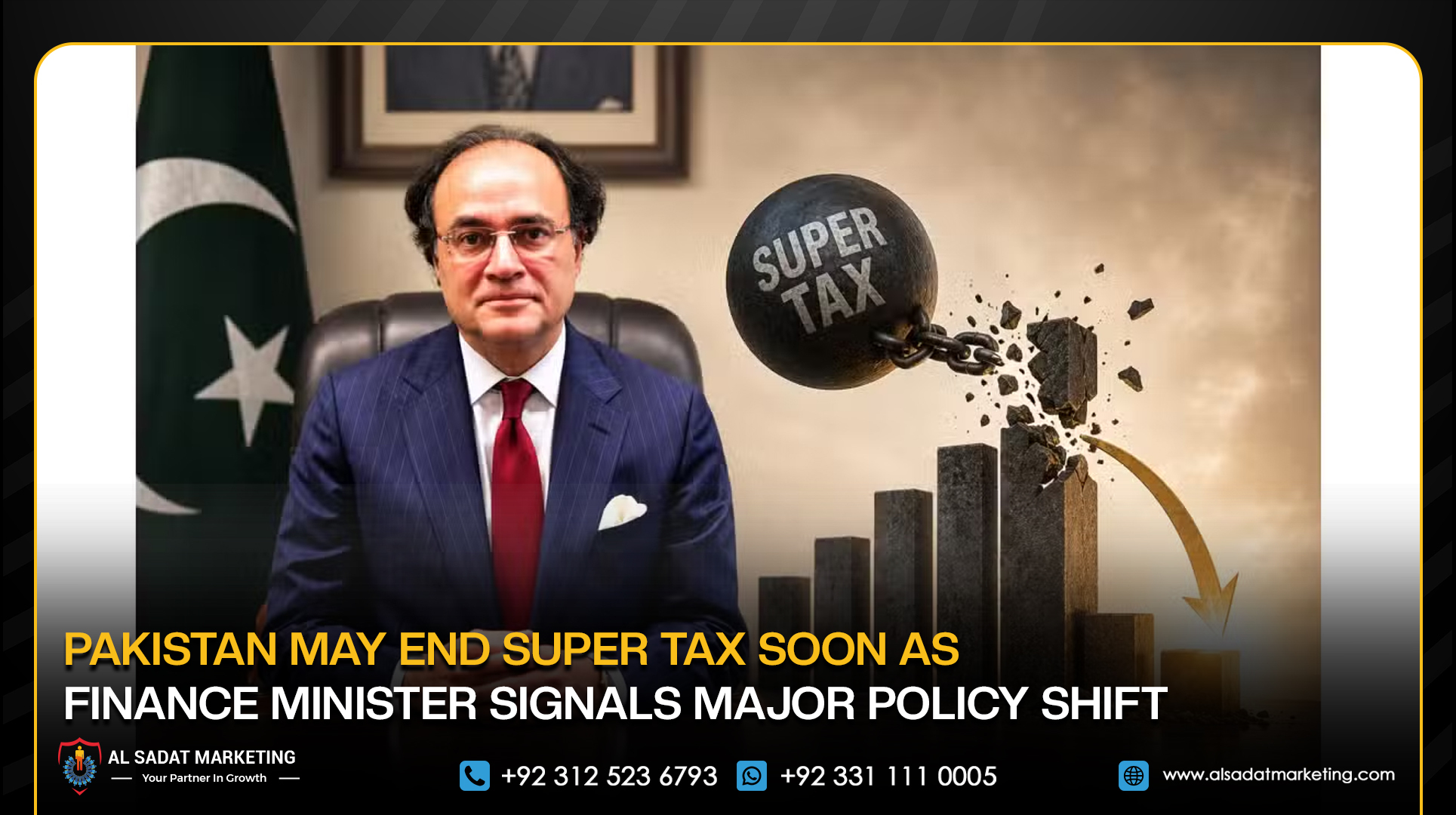
Finance Minister Muhammad Aurangzeb has indicated that the government intends to eventually phase out Pakistan’s super tax, reaffirming its commitment to reducing the levy over the coming years.
Speaking at a meeting of the Senate Standing Committee on Finance, Aurangzeb said the government’s direction is clear: the super tax is not meant to be permanent, and efforts will continue to create the fiscal space needed for its gradual elimination.
“We will keep working every year to reduce the burden and move towards ending the super tax,” the finance minister told lawmakers.
His remarks come shortly after the government proposed reductions in super tax rates under the federal budget for FY2026-27, a move aimed at easing pressure on businesses, encouraging investment, and supporting economic activity.
During the committee session, Senator Abdul Qadir suggested raising the exemption threshold for the super tax from Rs. 500 million to Rs. 1 billion. However, Federal Board of Revenue (FBR) Chairman Rashid Mahmood Langrial cautioned that such a decision would create a significant revenue gap, requiring the government to introduce an additional Rs. 250 billion in tax measures to compensate for the shortfall.
Initially introduced as a temporary measure during a period of fiscal strain, the super tax has evolved into a major source of government revenue. Despite this, business leaders and investors have long argued that the levy increases the cost of doing business, discourages investment, and undermines competitiveness.
The government has already proposed a phased reduction in super tax rates across several income brackets in the latest budget. Officials maintain that any future cuts will depend on stronger revenue collection, improved fiscal conditions, and Pakistan’s broader commitments under its economic reform agenda.