
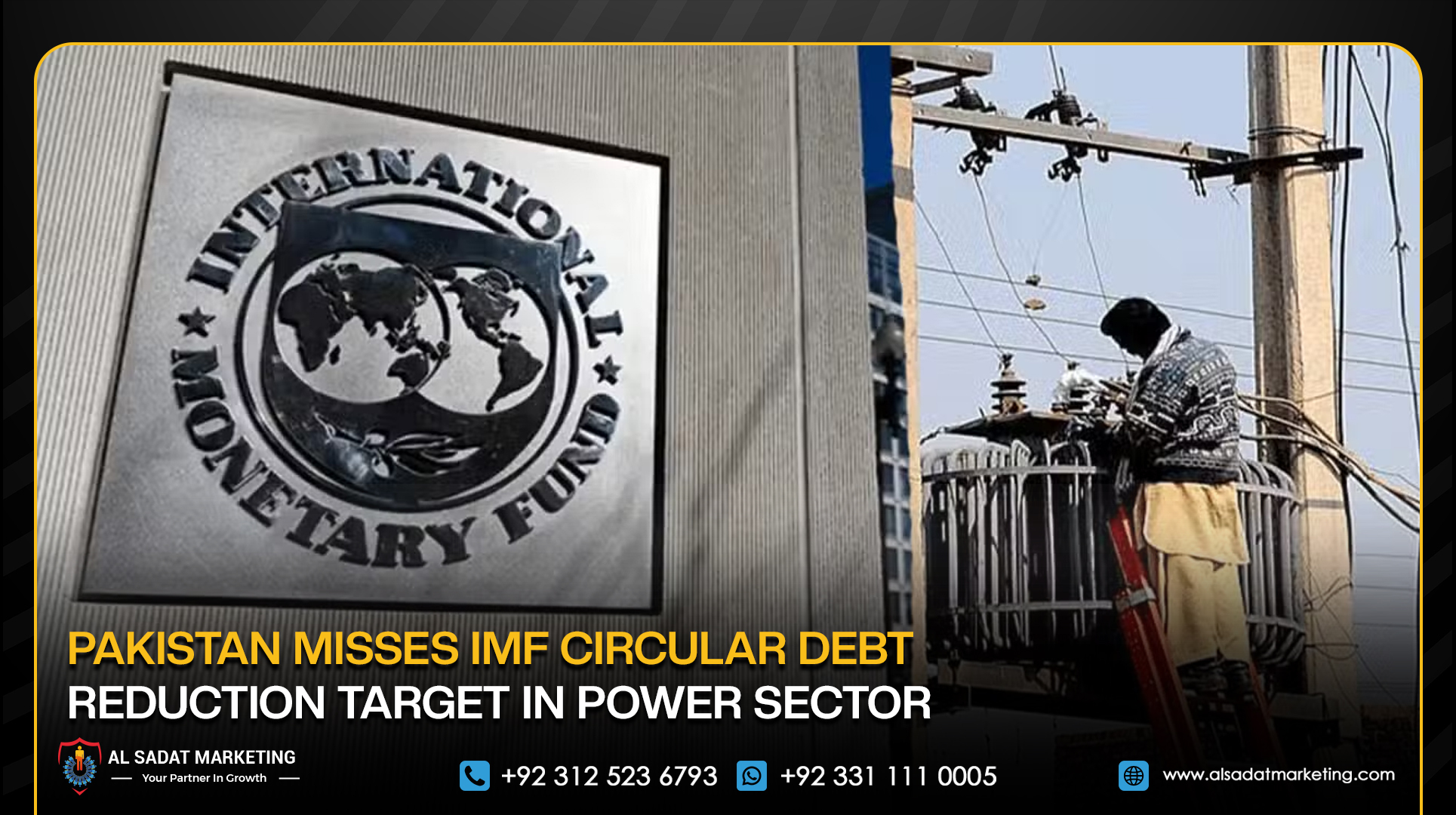
Pakistan has fallen short of its commitment under the International Monetary Fund (IMF) program to reduce the power sector’s circular debt to Rs. 1.614 trillion by the end of FY2025-26. Instead, the outstanding circular debt has reached Rs. 1.835 trillion, missing the agreed target by a significant margin.
According to a report by Business Recorder, government officials attributed the shortfall mainly to K-Electric’s unpaid power purchase dues of approximately Rs. 200 billion and the weak financial performance of several power distribution companies (DISCOs). Officials estimate the target was missed by nearly Rs. 300 billion, making it impossible to eliminate the annual circular debt flow as planned.
Why the Target Was Missed
The IMF had projected that a combination of lower global fuel prices, improved bill recoveries, reduced transmission losses, and declining interest rates would help Pakistan bring circular debt down to the agreed level by June 2026.
However, the Power Division later informed the Economic Coordination Committee (ECC) that circular debt had already increased to Rs. 1.924 trillion by the end of May 2026. This figure includes Rs. 873 billion in bank borrowings obtained through circular debt financing.
Government Seeks Additional Funding
To address the growing financial gap, the Power Division requested a Technical Supplementary Grant (TSG) of Rs. 152 billion. It also proposed reallocating Rs. 97.649 billion from K-Electric’s Tariff Differential Subsidy allocation to improve cash flow across the power sector.
The ECC approved only Rs. 54.451 billion, after adjusting the amount against available funds.
K-Electric Dues Remain a Major Challenge
Officials informed the ECC that K-Electric’s outstanding payments continue to be one of the major contributors to the accumulation of circular debt.
Following a recent High Court ruling, the committee directed the Power Division to actively pursue the legal proceedings, with officials expecting further progress in the case later this month.
Circular Debt Continues to Pressure the Economy
Circular debt remains one of Pakistan’s most pressing structural economic issues. The growing liabilities continue to weaken the financial health of the power sector, increase the government’s subsidy burden, and remain a key area of reform under the country’s ongoing IMF program.