
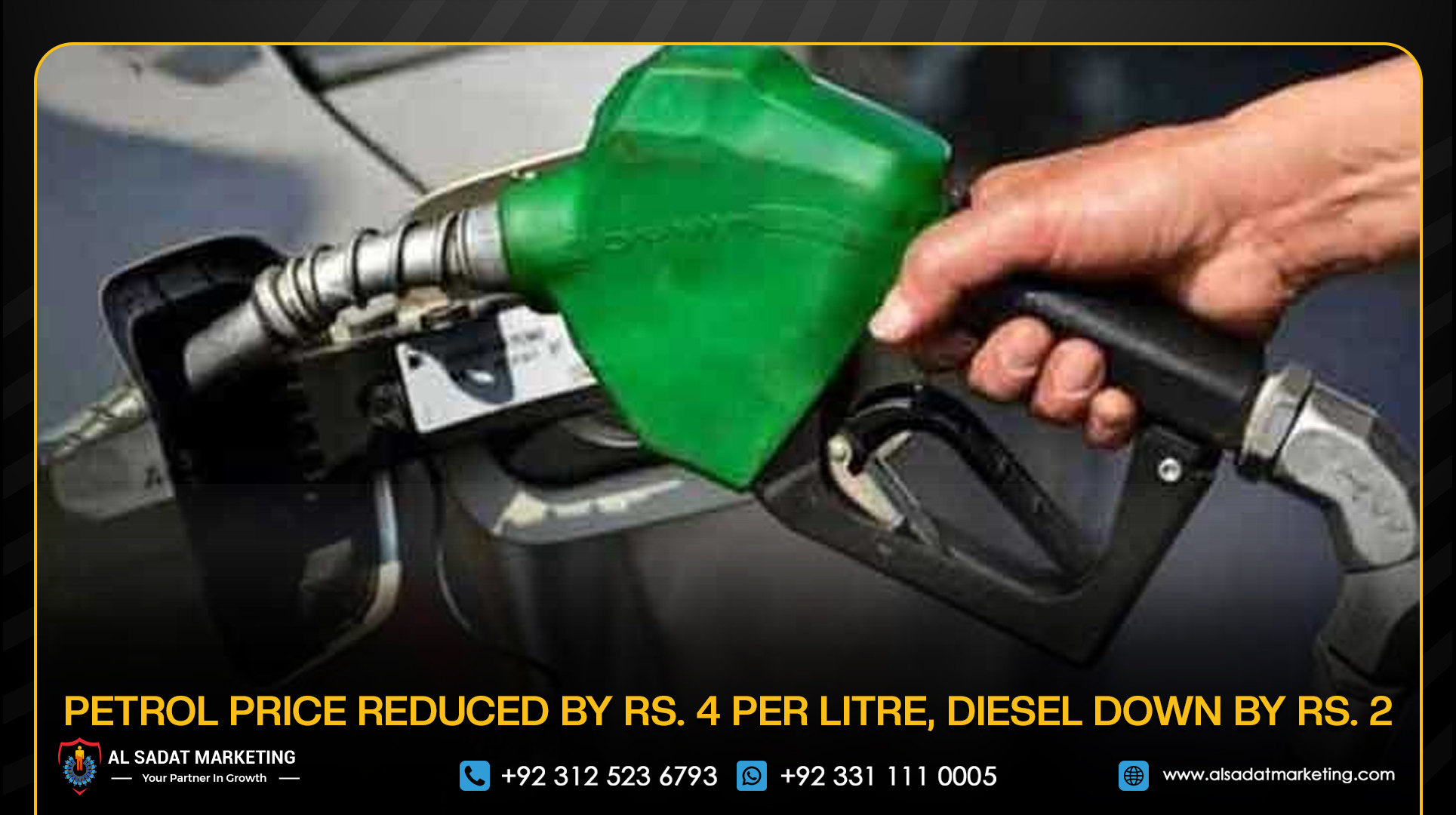
The federal government has reduced the prices of petrol and high-speed diesel (HSD) for the week ending June 19, providing modest relief to consumers amid ongoing fluctuations in global energy markets.
According to a notification issued by the Petroleum Division on Friday, the revised prices came into effect on June 13.
Under the latest adjustment, the price of petrol has been cut by Rs4 per litre, bringing it down to Rs373.78 from Rs377.78 per litre. Similarly, the price of high-speed diesel has been reduced by Rs2 per litre to Rs378.78, compared to the previous rate of Rs380.78 per litre.
In contrast, the government increased the price of kerosene oil by Rs1.49 per litre. As a result, kerosene will now be sold at Rs282.19 per litre, up from Rs280.70 per litre.
The latest revision follows last week’s announcement in which the government reduced the price of petrol by Rs4 per litre while leaving diesel rates unchanged.
Pakistan has been reviewing petroleum prices on a weekly basis in response to heightened volatility in international oil markets. The mechanism was adopted following the escalation of tensions involving Iran, which disrupted global energy markets and raised concerns over supply routes, including the Strait of Hormuz—a strategic passage that carries nearly one-fifth of the world’s oil and gas shipments during normal conditions.
Petrol is primarily used by motorists, motorcyclists, and rickshaw drivers, making fuel price changes particularly significant for middle- and lower-middle-income households that depend on private transport for daily commuting.
High-speed diesel, meanwhile, plays a critical role in the country’s transport and agricultural sectors. It fuels heavy goods vehicles, buses, trucks, trains, and farm machinery such as tractors, tube wells, and threshers. As a result, fluctuations in diesel prices are often viewed as inflationary due to their potential impact on transportation costs and the prices of essential goods.
The government said it would continue monitoring international market trends and reviewing domestic fuel prices accordingly.