
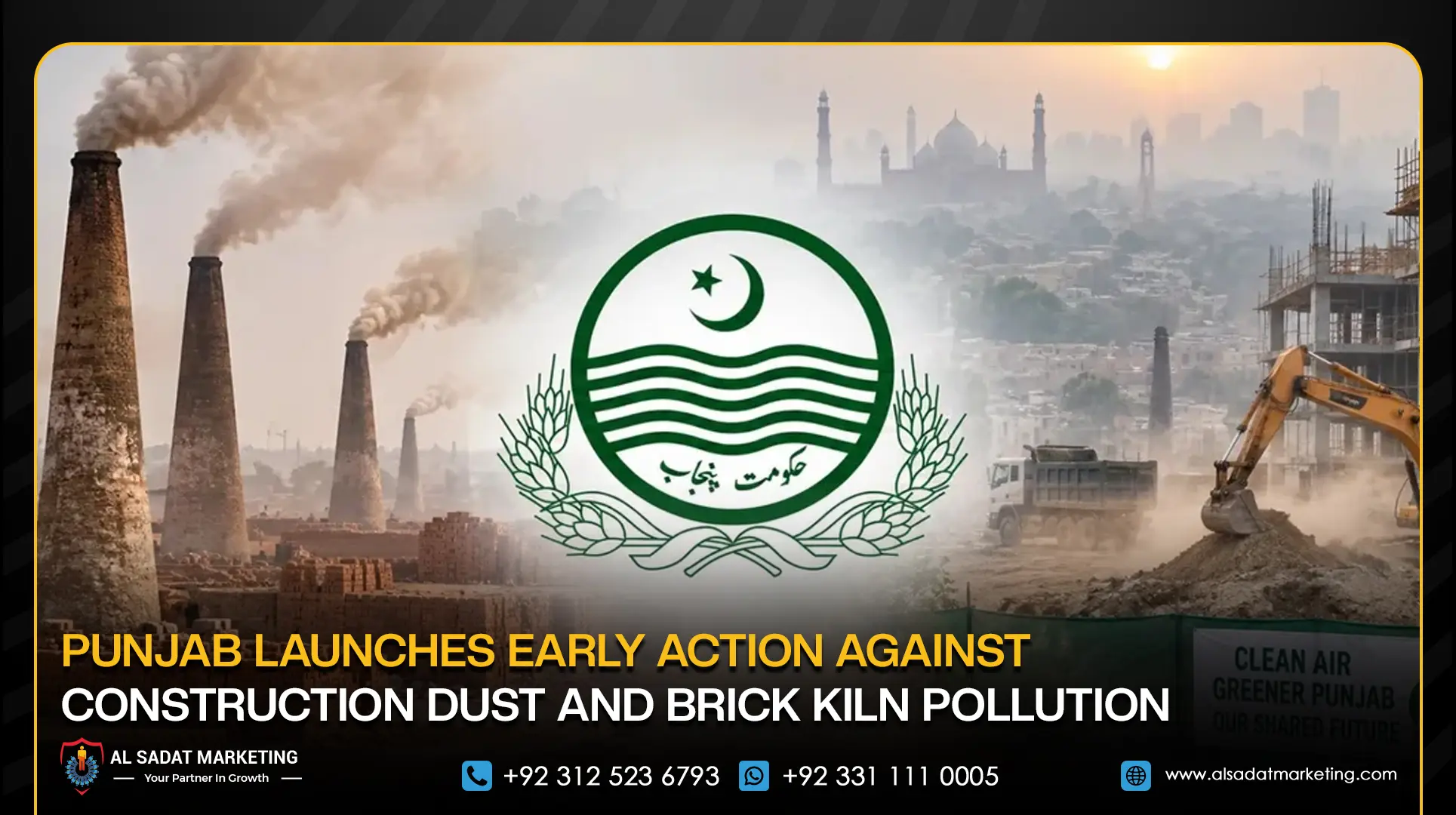
LAHORE: The Punjab government has launched a province-wide pre-smog enforcement campaign ahead of the October-to-January pollution season, with authorities directed to take early action against construction dust, brick kilns and other major sources of air pollution.
The Punjab Environment Protection Agency (EPA) has instructed relevant government departments, civic bodies and development authorities to strengthen pollution-control measures before smog levels typically increase across the province.
Construction Sites Face Greater Scrutiny
Construction dust is among the sources being targeted under the campaign. Authorities have been directed to improve compliance with measures designed to limit dust emissions from construction and development activities.
The Environment Protection Department has also proposed incorporating dust-control standard operating procedures into project approval and execution requirements. If formally adopted, the measure could make dust management a more direct condition of construction activity rather than an issue addressed only through inspections after work has started.

Brick Kilns Under Enforcement
Brick kilns are another major focus of the campaign, particularly units that have not adopted the required zigzag technology.
The government has ordered intensified inspections and enforcement against non-compliant kilns as part of its broader effort to reduce emissions before the peak smog period.
Previous enforcement efforts provide some context for the renewed campaign. According to Punjab EPA’s published smog-mitigation figures, 485 illegal brick kilns were demolished and another 3,178 were sealed, while more than Rs. 276 million in fines were imposed during an earlier campaign.
Government Targets Multiple Pollution Sources
The campaign extends beyond construction and brick kilns. Authorities are also targeting crop-residue burning, waste burning, vehicle emissions and dry sweeping.
The Suthra Punjab Authority has been directed to discontinue dry sweeping and move toward mechanical or wet-cleaning methods. The objective is to reduce the amount of settled road dust being reintroduced into the air, particularly along busy roads and high-traffic areas.
Previous Campaign Showed Improvement
Punjab’s Environment Protection Department has reported measurable improvements in air pollution during the previous year’s mitigation efforts.
According to its published data, daily PM2.5 peaks fell by 56 percent, from 539 micrograms per cubic metre in November 2024 to 237 micrograms per cubic metre in November 2025. The department also reported a 37 percent decline in the monthly average and a 15.6 percent reduction in year-to-date pollution levels.
These figures provide a basis for the government’s decision to continue strengthening preventive measures, although the results of the current campaign will only become clear during the upcoming smog season.

Technology to Strengthen Monitoring
Enforcement is also expected to make greater use of technology.
Authorities plan to employ Safe City cameras, thermal imaging and artificial intelligence-based monitoring systems to identify pollution sources and support enforcement activity.
The campaign operates under the Punjab Environmental Protection Act, 1997, along with the Punjab Environmental Protection Smog Prevention and Control Rules, 2023, which provide the regulatory framework for action against non-compliant pollution sources.
Implementation Will Be Key
While the government has announced a broad enforcement drive, some measures are still at the proposal stage. In particular, the proposed integration of dust-control SOPs into construction project approval conditions will need formal adoption and implementation before its full impact can be assessed.
The effectiveness of this year’s campaign will ultimately depend on how consistently inspections, monitoring and penalties are applied across the province.
Implications for Developers and Contractors
Developers and contractors operating in Punjab should expect greater attention to dust suppression and environmental compliance during the coming construction season.
Projects may need to maintain effective dust-control practices throughout construction rather than relying on temporary measures during inspections. Increased use of camera-based and AI-supported monitoring could also make non-compliance easier for authorities to identify.
Potential Impact on Brick Supply
The continued enforcement against brick kilns without approved zigzag technology could also affect construction-material supply in some areas.
Developers and contractors relying heavily on bricks may need to monitor kiln availability and material prices, particularly if additional non-compliant kilns are sealed or removed from operation during the smog-control campaign.
The immediate objective remains reducing pollution before the peak smog period, while the longer-term impact on construction activity and material markets will depend on the scale and consistency of enforcement.