
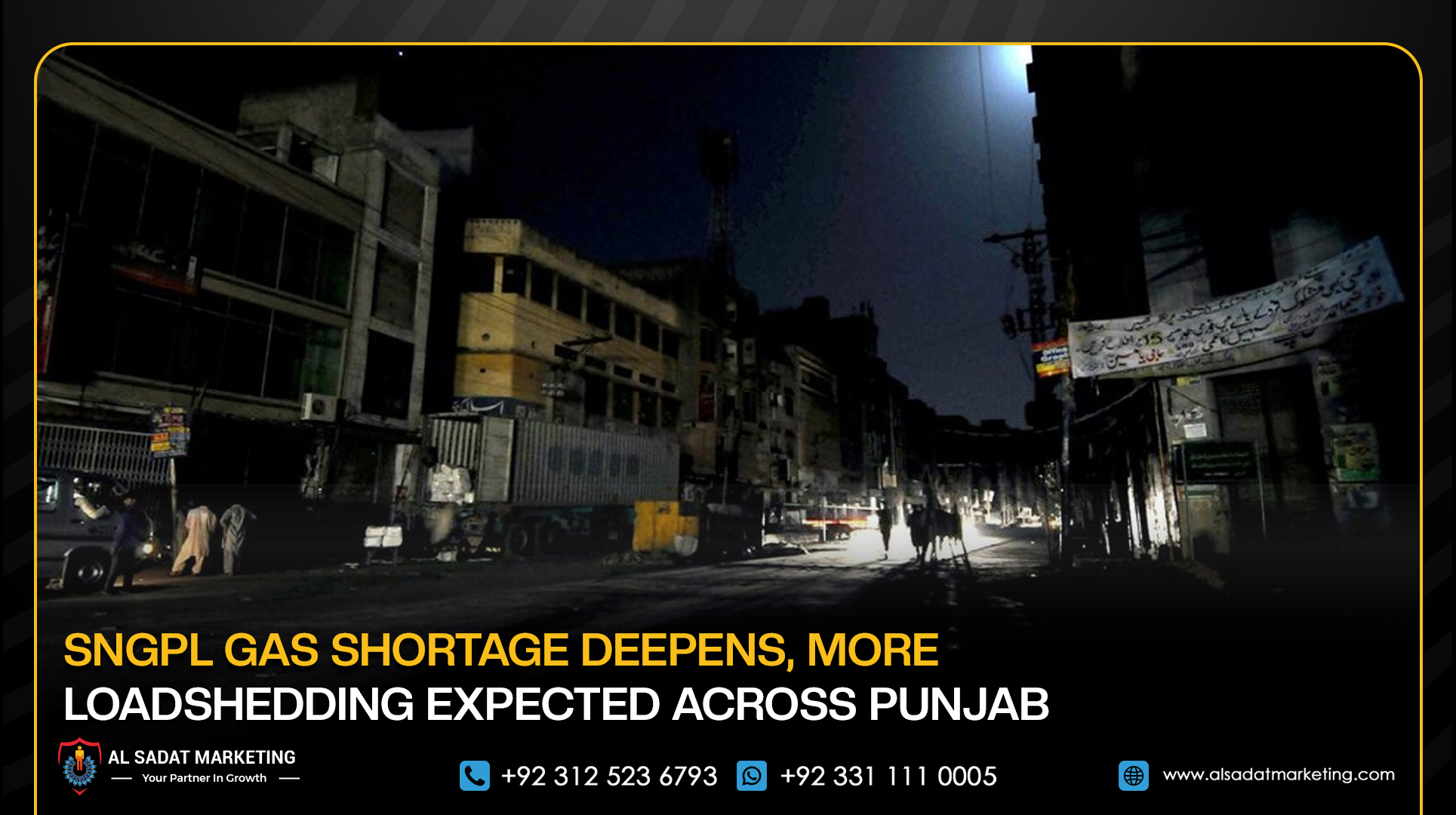
Pakistan’s gas supply chain has faced another disruption after Sui Northern Gas Pipelines Limited (SNGPL) declared force majeure on the supply of regasified liquefied natural gas (RLNG), citing continued security concerns affecting LNG shipments through the Strait of Hormuz.
The disruption is expected to reduce RLNG supplies to Punjab for nearly three weeks, increasing the likelihood of electricity shortages and higher power generation costs, according to Dawn.
SNGPL said Pakistan State Oil (PSO) had informed the company that its LNG supplier’s force majeure remains in effect due to the ongoing military situation in the Gulf region. As a result, LNG cargoes scheduled for delivery between July 14 and August 3 are expected to be delayed, limiting RLNG availability for power generation.
The utility has issued separate notices to four RLNG-fired power plants in Punjab, informing them that its contractual obligations remain suspended because the supply disruption is beyond its control. While QatarEnergy has begun gradually restoring operations, shipping through the Strait of Hormuz continues to face interruptions because of persistent security risks.
SNGPL also said QatarEnergy will be unable to deliver additional LNG cargoes planned under the Annual Delivery Plan 2026 during the affected period. A revised delivery schedule for the remainder of the contract year is expected once operational conditions stabilize.
The supply shortfall could impact more than 5,000 megawatts of RLNG-based electricity generation in Punjab and restrict power transfers from Sindh to northern parts of the country. To meet demand, authorities may need to purchase LNG from the more expensive spot market or operate power plants on diesel, both of which would significantly increase electricity generation costs.
Officials said existing LNG reserves may help ease the immediate impact through controlled distribution, but warned that prolonged disruptions beyond August 3 could lead to additional power load shedding and higher electricity bills. SNGPL said it is closely coordinating with PSO and will continue to monitor the situation before issuing further updates.