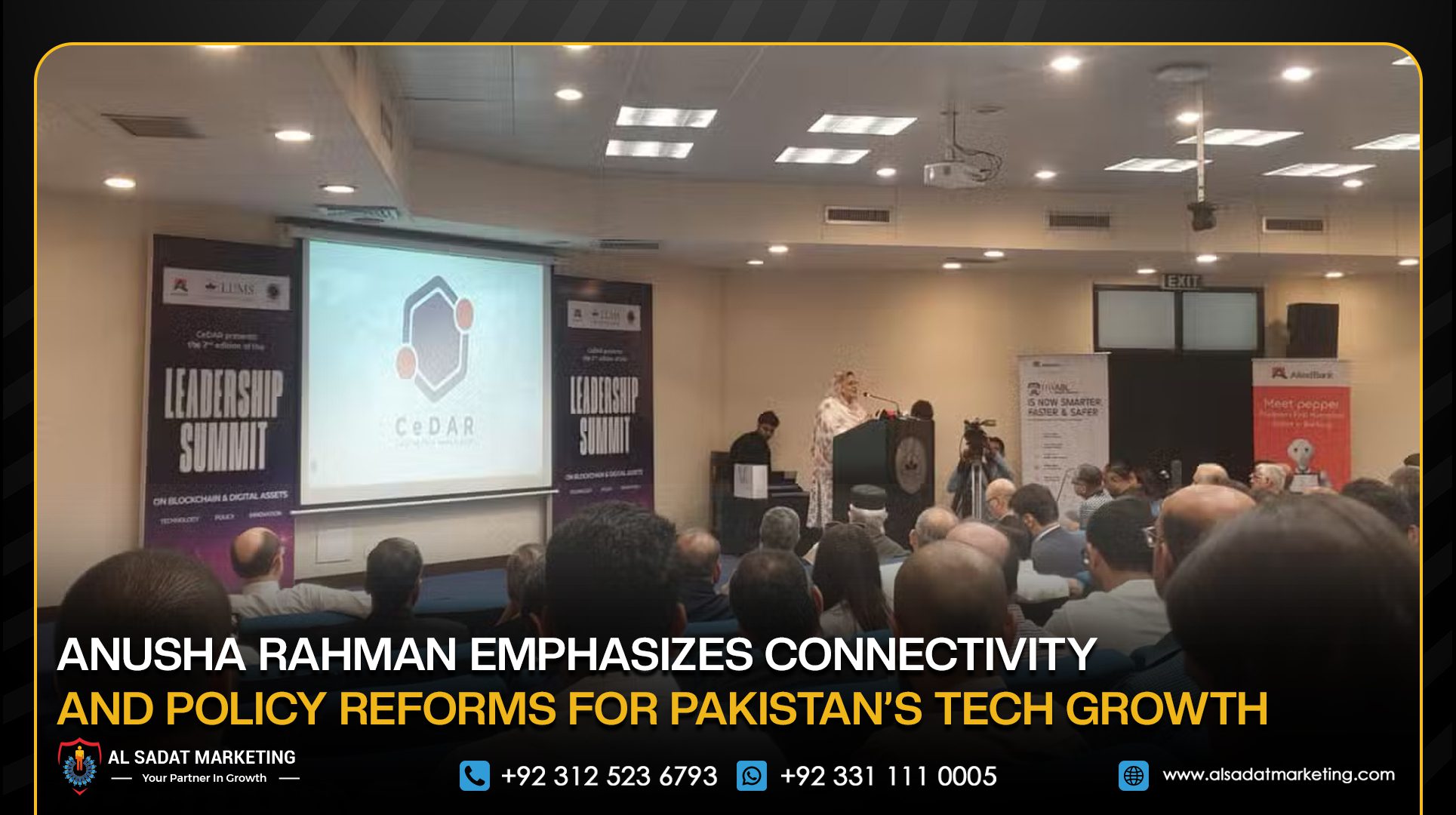
At a leadership summit on blockchain and digital assets hosted by the LUMS Centre for Digital Assets Research, Senator Anusha Rahman Khan called for urgent regulatory reforms and major investment in digital connectivity to help Pakistan fully benefit from emerging technologies like artificial intelligence, blockchain, and digital finance.
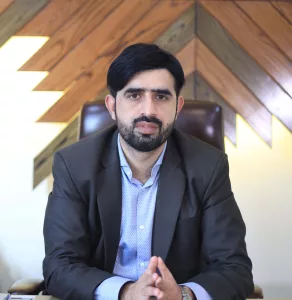
The summit brought together policymakers, financial sector leaders, and technology experts, with participation from senior officials including Waqar Qureshi, Director General (IT Solutions) at the Punjab Information Technology Board.
In her keynote address, the former IT minister said Pakistan has already entered the era of advanced digital technologies, but the regulatory environment is still evolving. She stressed that this is a critical period for shaping long-term policy frameworks that will define the country’s digital future.
She highlighted connectivity as the biggest barrier to digital growth, pointing out that many regions still lack reliable and affordable internet access. To address this gap, she announced plans to introduce satellite-based high-speed internet across Punjab to improve access in underserved areas and support large-scale deployment of digital technologies.
According to her, without strong connectivity, meaningful progress in artificial intelligence and digital services remains limited.
Senator Rahman also emphasized the role of blockchain technology as a tool for governance and transparency. She described it as a secure and decentralized system that can improve public service delivery and strengthen financial accountability. She said combining trust and data could significantly change how governance and economic systems function in Pakistan.
She further outlined Punjab’s digital development strategy, which includes setting up specialized AI and blockchain innovation centers in cities such as Lahore, Faisalabad, and Sahiwal. The province is also planning large-scale digital skills training programs targeting millions of young people, including women, over the next few years.
Her vision focused on creating solutions that address local challenges while empowering Pakistan’s youth to build scalable digital products.
During discussions on digital finance, she noted that moving toward a cashless economy is not just about convenience but about creating transparency, improving tax systems, expanding access to credit, and enabling targeted welfare programs.
The event also featured panel discussions with senior leaders from banks, fintech companies, venture capital firms, and digital payment platforms. Speakers highlighted how artificial intelligence and blockchain are reshaping financial systems and stressed the need for clearer regulations and innovation-friendly policies.
Another session focused on digital payments and financial inclusion, where industry experts agreed that expanding digital financial services is key to bringing more people into the formal economy and improving transparency.
Across all sessions, participants agreed that Pakistan’s digital future depends on three key factors: strong regulatory frameworks, reliable connectivity, and sustained investment in innovation.
The summit concluded with a shared view that artificial intelligence, blockchain, and digital finance will play a central role in shaping Pakistan’s economic growth in the coming years.