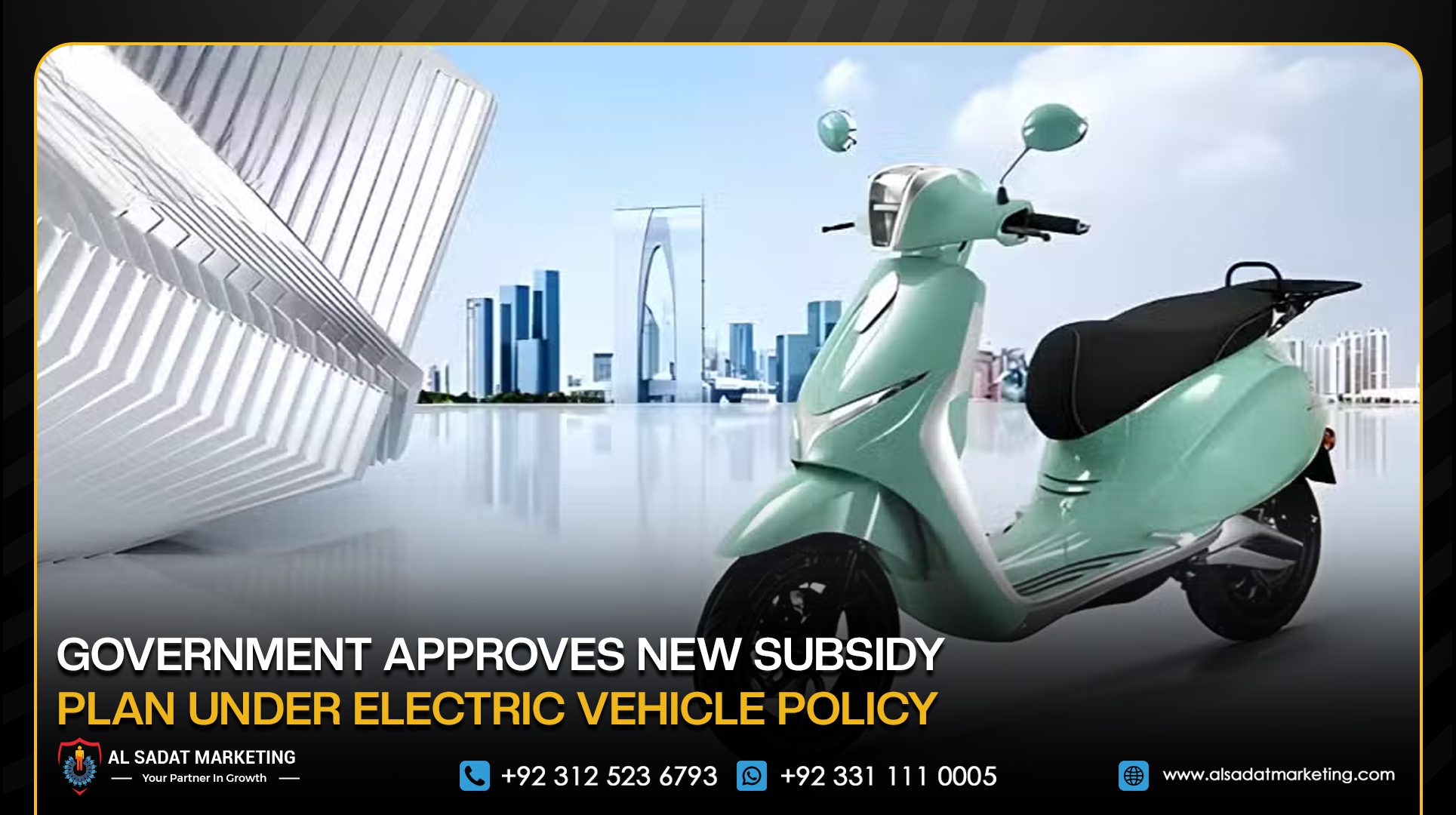
The federal government has approved the second phase of the Pakistan Accelerated Vehicle Electrification (PAVE) Programme under the New Energy Vehicles (NEV) Policy 2025–30, aiming to expand the adoption of electric bikes, rickshaws, and loaders. Distribution will now take place on a first-come, first-served basis, replacing the earlier balloting system.
A budget of Rs. 9 billion has been allocated for FY2025–26, approved by the Economic Coordination Committee (ECC). The initiative will operate on a revenue-neutral model financed through the NEV Adoption Levy Act 2025.
For the current fiscal year, the programme targets a total of 119,170 vehicles, including 116,000 electric bikes and 3,170 rickshaws and loaders. Following a pilot phase that delivered 41,000 units, the updated second phase aims to distribute 76,000 bikes and 2,170 three-wheelers. Additionally, the ECC is expected to greenlight a fast-track rollout of 100,000 more electric bikes within three months, using approximately 130,000 locally available and imported CKD kits.
Under the scheme, a fixed subsidy of Rs. 80,000 per electric bike will be provided directly to pre-qualified manufacturers. Distribution will take place in 200 batches of 500 units each. Authorities estimate the initiative could save around 8.6 million litres of petrol in the short term—worth about $8 million—with total savings projected to reach $222 million over five years.
The government has also announced that 600 electric bikes will be awarded free of cost to top-performing students from all 26 Boards of Intermediate and Secondary Education who secured top positions in the 2025 HSSC exams. This initiative is expected to cost approximately Rs. 150 million.
To improve efficiency, several structural changes have been introduced. Applicants who were waitlisted in Phase 1 will be prioritised based on their original application timestamps. The subsidy model has also been revised: instead of paying the full amount upfront, buyers will now pay the reduced price after subsidy, while the Engineering Development Board (EDB) will transfer subsidy payments directly to manufacturers through the State Bank of Pakistan after verifying delivery and registration.
A revised self-financing option has been introduced for federal employees in BS-16 and below, requiring a down payment of Rs. 10,000 for bikes and Rs. 100,000 for rickshaws. The remaining amount will be recovered through interest-free salary deductions over a period of 6 to 18 months.
The programme’s scope has been expanded to include institutional financing, public-private partnerships linked to housing, overseas Pakistanis holding NICOP or POC, SECP-registered non-banking financial companies, and fleet operators.
Verification procedures have also been streamlined. The previous requirement for full third-party verification has been replaced with a risk-based system that uses biometric authentication, photographic evidence, and digital checks via the programme portal. This change follows concerns over high verification costs, which exceeded Rs. 500 million in Phase 1.
To support implementation, the EDB will set up a dedicated 14-member unit with an annual cost of Rs. 32.76 million, along with Rs. 37 million allocated for operational expenses in FY2025–26.
During Phase 1, the programme received over 269,000 applications, reflecting strong demand despite limited financing approvals. The self-finance category, however, recorded an impressive 99.6 percent delivery success rate.