
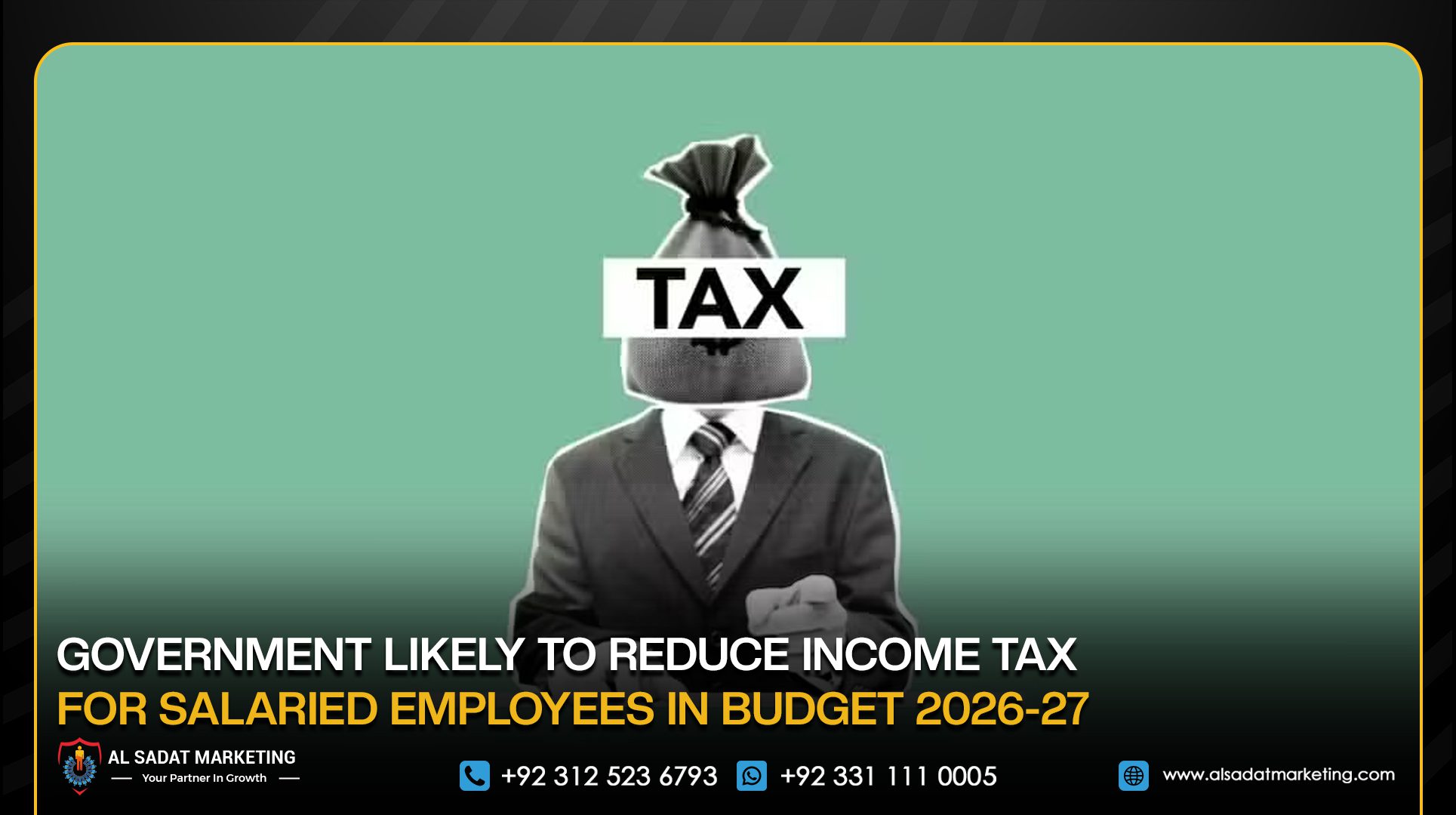
The federal government is considering reducing the income tax burden on salaried individuals in the upcoming Budget 2026-27 while keeping government salaries and pensions unchanged.
According to reports, Finance Minister Muhammad Aurangzeb is supporting a proposal to lower tax rates for salaried employees and possibly raise the taxable income threshold. The move is aimed at providing relief to salaried taxpayers, who have become one of the country’s largest contributors to tax revenue compared to sectors such as retail, wholesale, exports, and real estate.
Sources familiar with the discussions said the government may avoid announcing salary and pension increases this year and instead use the available fiscal space to offer tax relief. Officials believe salary hikes often push employees into higher tax brackets, reducing the actual benefit in take-home pay, especially for public sector workers.
An official involved in the budget consultations stated that the objective is to ensure government employees still receive financial relief through lower taxes and a higher taxable income limit, even without an increase in salaries.
Over the past four years, government salaries have reportedly increased by more than 60 percent, while private sector wage growth remained relatively weak due to inflation and slower economic activity.
Officials said the tax policy office, along with independent consultancy firms, is currently preparing multiple proposals that are expected to be discussed with the IMF during budget talks beginning on May 15.
Reports also suggest that the federal development programme may face further reductions and could be limited to a minimal allocation. However, final decisions regarding tax relief, salaries, pensions, and development spending are expected after negotiations with the IMF are completed.
Last year, the government reportedly absorbed an additional financial burden of over Rs. 170 billion because of salary and pension increases, while provincial governments faced costs more than double that amount. Officials believe that even partial savings from freezing pay raises could help significantly reduce income tax rates for salaried individuals.
The salaried class has emerged as one of Pakistan’s biggest taxpayers during the current fiscal year. During the first nine months alone, salaried employees reportedly paid more than Rs. 425 billion in taxes — over twice the contribution made by the real estate sector and higher than the combined taxes collected from wholesalers, retailers, and exporters.
Despite their growing contribution, salaried households continue to struggle with rising living expenses caused by inflation and economic pressures.
Officials clarified that salary increases already approved last month for employees working on Public Sector Development Programme (PSDP) projects will remain unchanged. The government had approved a 20 to 35 percent increase in the minimum salaries of PSDP employees after a gap of four years, effective from July 1, 2026.
PSDP employees last received a pay revision in April 2022. Unlike regular government workers, these employees previously faced cuts in annual increments and maximum salary limits while other public sector salaries increased substantially during the same period.