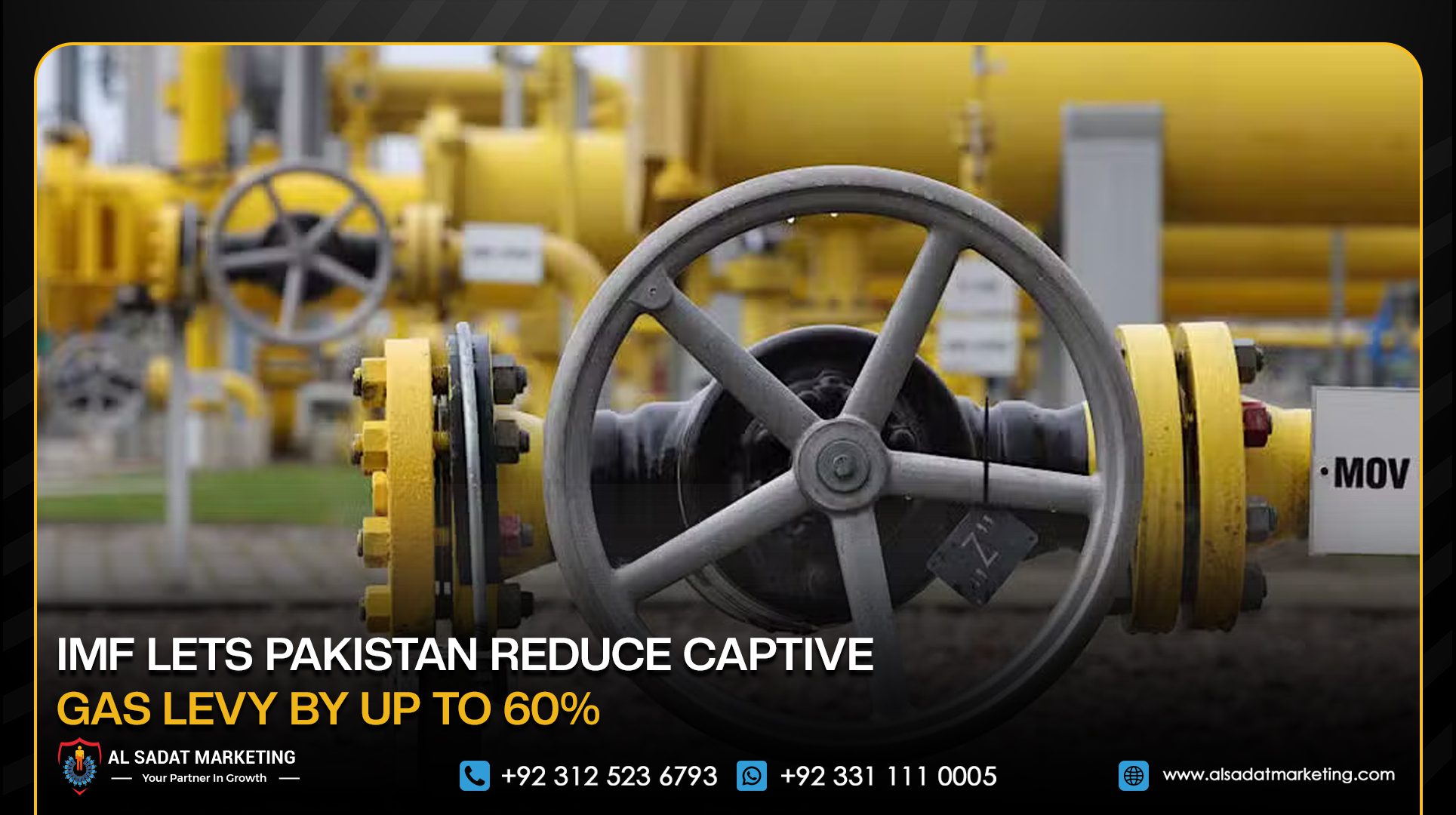
Pakistan has received conditional approval from the International Monetary Fund (IMF) to change the formula used for calculating the captive gas levy, a move that could lower gas costs for industries using captive power plants for self-generated electricity.
According to a report, the revised formula will replace the current system, which is based only on the peak B3 industrial electricity tariff, with a weighted average of both peak and off-peak B3 tariffs. The change is expected to reduce the levy burden for industrial consumers.
Under the current method, the captive gas levy stands at Rs. 1,303 per mmBtu. With the proposed revised formula, the levy could fall to around Rs. 522 per mmBtu. While reductions may vary each month, estimates suggest industries could see relief ranging between 30% and 60%.
The proposal was reportedly raised by Petroleum Minister Ali Pervaiz Malik during Pakistan’s third review discussions with the IMF last month. At that stage, the IMF had agreed to review the possibility of using average tariffs instead of only peak rates.
Despite agreeing to revise the formula, the IMF has maintained its broader policy of discouraging captive gas-based power generation. It reportedly rejected Pakistan’s request to freeze the additional 15% levy and did not agree to exempt efficient captive plants from the charge.
Instead, the lender has asked the government to continue with plans to increase the levy to 20%, saying higher charges are needed to encourage industries to shift back to electricity from the national grid.
The report added that the IMF has linked the new formula to electricity demand from the grid. If industrial demand from the national system declines, Pakistan may be required to impose the 20% levy earlier than the planned August deadline, possibly as soon as July. In case of a sharper fall in demand, the levy could rise beyond 20%.
The captive levy is based on the gap between Nepra-notified B3 industrial electricity tariffs and the cost of generating electricity through gas priced by Ogra. The policy aims to make self-generation less attractive and push industries toward using grid electricity.
Government officials have also informed the IMF that the levy has negatively affected gas utilities. They said the policy has contributed to financial losses at Sui gas companies, partly because imported gas was redirected to lower-paying consumers.
During the first half of the current fiscal year, Sui companies reportedly posted losses of Rs. 104 billion, while collections from the captive levy were also below expectations.
Many industries have meanwhile shifted toward alternatives such as rooftop solar systems to reduce power costs. This trend has raised new concerns among policymakers, with some officials considering additional regulations for solar adoption.
The IMF reportedly wants to ensure that industries that have already moved from captive generation to grid electricity do not return to gas-based self-generation once the revised levy formula is implemented.