
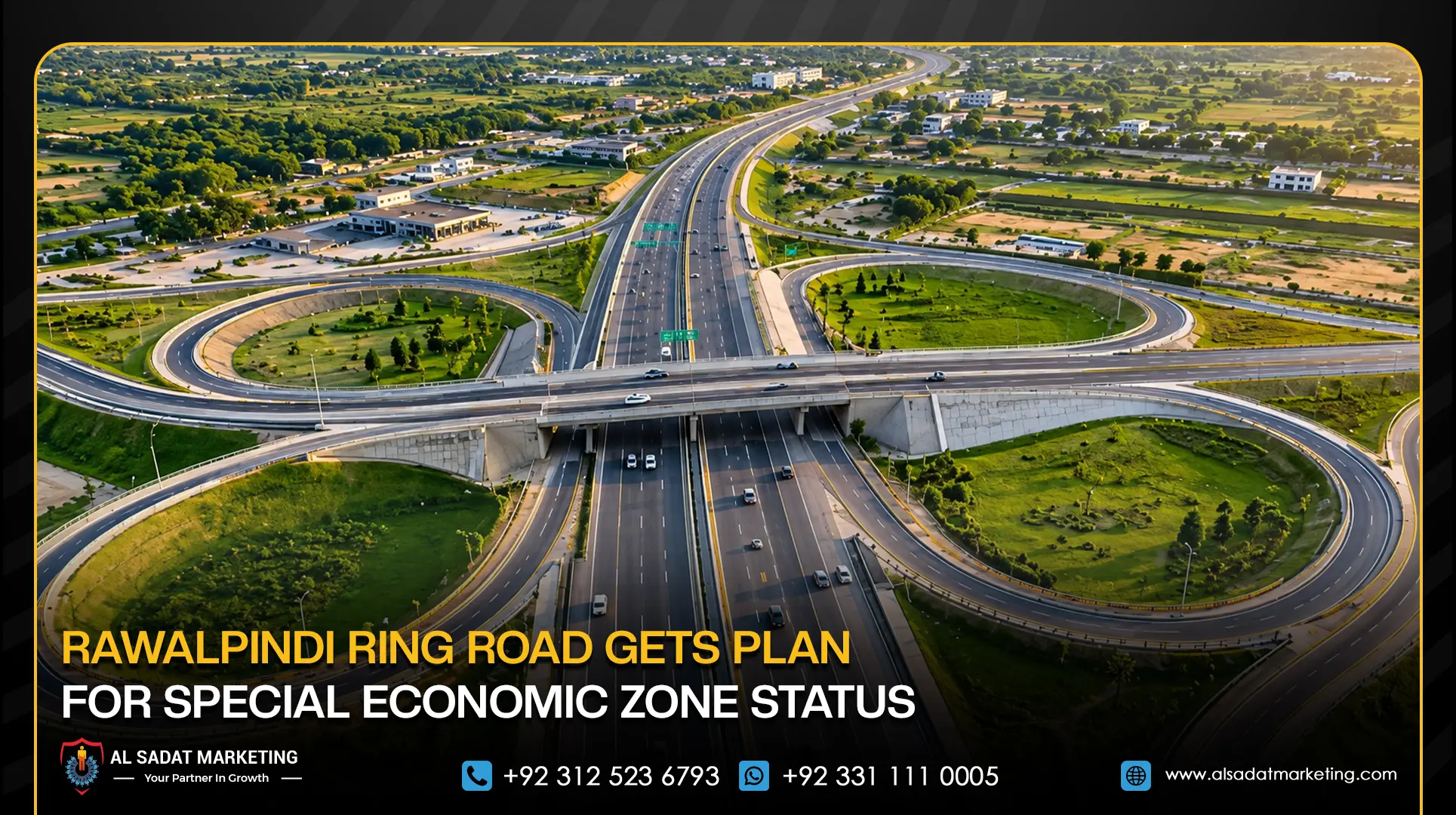
RAWALPINDI: Authorities have proposed developing the Rawalpindi Ring Road corridor under a Special Economic Zone (SEZ) model, with plans to establish a designated economic and commercial corridor around the approximately 38-kilometre road project.
The proposal was discussed during a review of the land use plan for the Rawalpindi Ring Road. The meeting was chaired by Housing Secretary Noorul Amin Mengal, while Rawalpindi Commissioner Salman Ghani briefed officials on the proposed land use framework. A planning consultant also presented details of the proposed zoning arrangements.

Industrial and Commercial Zones Planned
Under the proposed plan, areas along the ring road would be allocated for light and heavy industrial activities. A tax-free zone has also been proposed as part of the broader SEZ concept.
The plan includes several other dedicated zones aimed at supporting different economic and urban activities. These include areas for information technology, education, sports, food-related businesses and other sectors.
A green buffer zone is also planned between residential and commercial areas. Officials have proposed establishing an urban forest in this buffer to provide separation between different land uses.
Healthcare and Urban Facilities Included
The proposed land use plan also sets aside areas for hospitals and other healthcare facilities.
Bus terminals and other essential urban infrastructure have been incorporated into the planning framework to support the expected growth along the corridor.
According to the Housing Department, the integrated plan is intended to accommodate residential, commercial and agricultural activities while creating a structured framework for future development around the ring road.

Approval Still Required
The proposed SEZ designation is currently part of the planning process and is not yet a finalized status. A summary seeking approval of the land use plan is expected to be submitted to the provincial cabinet.
If approved, the proposed zoning framework would guide future development along the Rawalpindi Ring Road and could provide designated areas for industrial, commercial, residential and other activities.
For property owners and investors in areas surrounding the corridor, the actual impact will depend on the final approved land use plan, zoning regulations, infrastructure development and implementation of the proposed economic zones.