
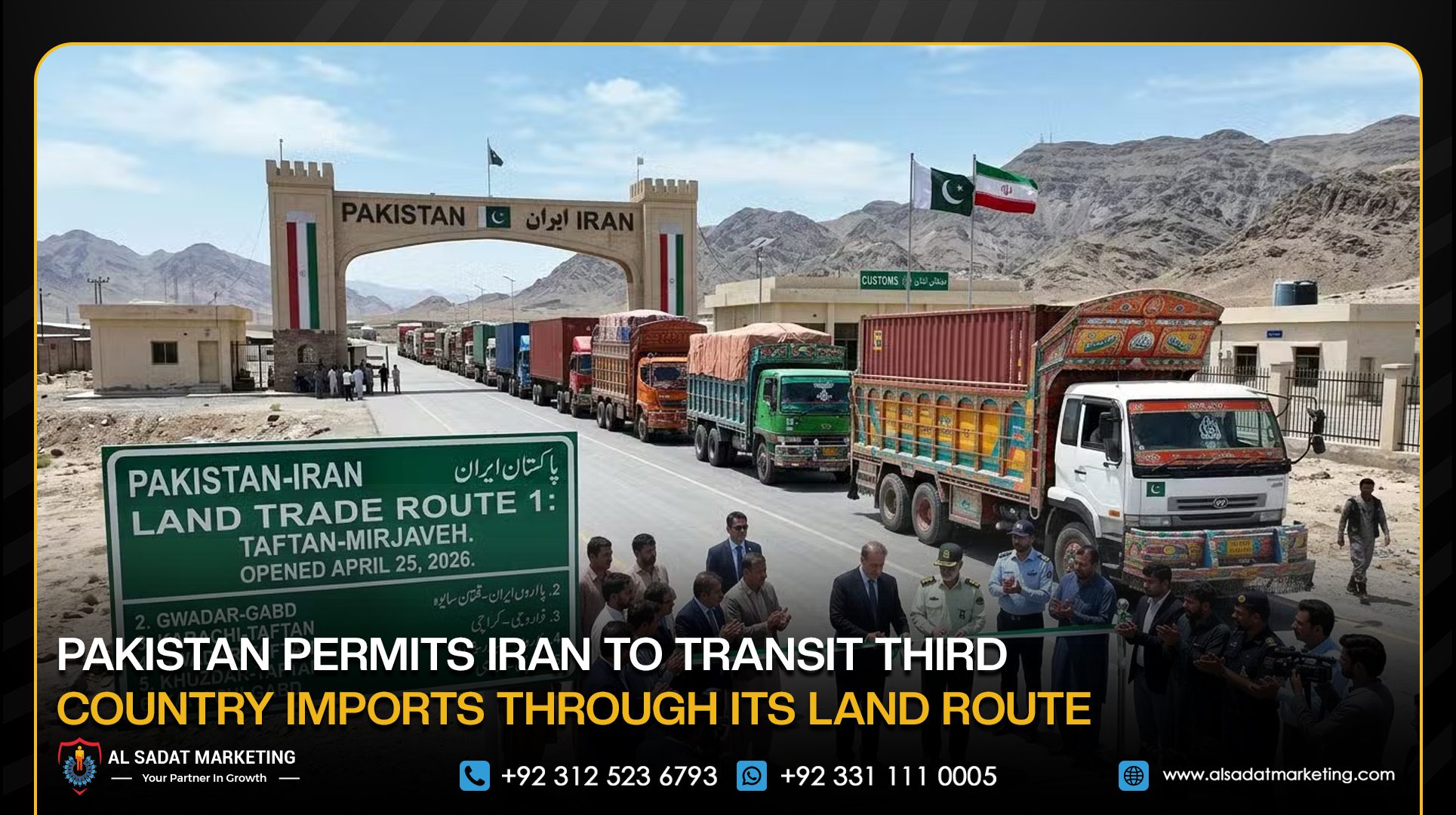
Pakistan has officially notified six transit trade routes for the transportation of goods to Iran under an encashable bank guarantee, a move aimed at clearing thousands of containers currently stuck at local ports.
The Ministry of Commerce issued the Transit of Goods through Territory of Pakistan Order, 2026, which came into effect on April 25.
The decision comes after reports that more than 3,000 containers carrying cargo for Iran have remained stranded at Karachi port in recent days due to regional tensions, shipping disruptions, and restrictions affecting Iranian ports.
Under the new arrangement, Pakistan has approved six routes connecting Karachi, Port Qasim, and Gwadar ports with the Gabd and Taftan border crossings for onward movement into Iran.
The notified routes include Gwadar to Gabd, Karachi or Port Qasim to Gabd through the coastal highway, Karachi or Port Qasim to Taftan via Khuzdar and Dalbandin, Gwadar to Taftan through Turbat, Panjgur, Quetta, and Dalbandin, Gwadar to Taftan through Liari, Khuzdar, Quetta, and Nokundi, and Karachi or Port Qasim to Gwadar before onward transit to Gabd.
The Ministry said all cargo movement under this notification will be regulated under the Customs Act, 1969, along with procedures prescribed by the Federal Board of Revenue.
According to the order, the facility applies to goods imported from a third country and then transported to Iran through Pakistani territory.
The arrangement has been introduced under the 2008 Pakistan-Iran agreement on international road transport of passengers and goods, along with powers granted under the Imports and Exports (Control) Act, 1950.
Under the rules, traders or their authorized customs agents must submit an encashable bank guarantee equal to the import duties applicable in Pakistan on the transit cargo.
The order also allows cross-stuffing, meaning goods can be shifted from one container to another or moved through another mode of transportation in accordance with customs laws.
The move follows major regional shipping disruptions linked to the recent US-Iran conflict, which began with US-Israeli strikes on Iran on February 28 and later paused under a ceasefire.
Officials expect the new transit facility to provide an alternative route for Iran-bound cargo, reduce congestion at Pakistani ports, and improve regional trade movement.